





Are Word Search Puzzle Games Good for Your Brain?
Word search and word find puzzles are often described as relaxing, yet they still ask you to scan a letter grid, hold a word list in mind, and stay with the hunt until the board is clear. That is not formal brain training—and it is not the same as crossword-style fill-ins—but it does engage several everyday mental skills when you play with attention.
This guide walks through what a typical word search puzzle game actually exercises, where the benefits are modest but real, and what no grid can replace on its own.
What Your Brain Is Doing While You Play
On the surface, the task is simple: find hidden words along straight paths in a grid of letters (horizontal, vertical, or diagonal, depending on the rules). Under the hood, several processes run in parallel:
- Visual scanning across rows, columns, and diagonals without losing your place
- Pattern matching between letter sequences and words you know
- Selective attention—treating busy filler letters as noise while staying alert for real paths
- Sustained focus over minutes, not seconds
Together, those habits make word search games more active than passive scrolling, even when the pace feels calm.
Visual Processing and Pattern Recognition
Most of the “work” in a word search puzzle game is visual. Your eyes sweep the grid; your brain flags familiar shapes—prefixes, doubled letters, rare consonants—that might belong to a list word.
Regular play tends to sharpen:
- Speed at spotting letter runs that could be words
- Awareness of how words sit in space (straight lines, overlaps, shared cells)
- Recognition of spelling patterns you have seen before
Experienced solvers often find words faster not because the grid got easier, but because scanning and pattern checks become smoother with practice.
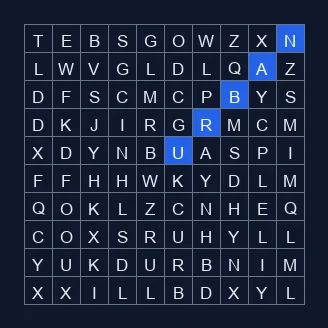
A highlighted diagonal path illustrates the kind of visual hunt word search rewards: you trace straight lines through noise, match letters to a known word (“URBAN” here), and move on—repeated hundreds of times per puzzle.
Attention and Concentration
Word search games reward steady concentration more than reflexes. There is no timer pressure on every title, but losing focus still costs you time when decoys and overlaps multiply.
While you play, you practice:
- Staying on one task instead of jumping away mid-scan
- Ignoring tempting but wrong letter clusters
- Keeping a consistent sweep pattern instead of random jumps
That kind of focused screen time can feel grounding when your day is full of interruptions—provided you treat the puzzle as a single task, not background noise.
Memory Involvement (Usually Light)
Memory shows up in word search puzzle games, but usually at a practical level rather than as dedicated memory drills.
You typically rely on:
- Short-term hold of which words remain on the list
- Recognition when a familiar spelling appears in the grid
You are not usually asked to memorize the board itself. The mental load is “remember what to find,” not “recall every cell.” That keeps the memory angle helpful but modest.
Language and Vocabulary
Because every path spells a real word, word search puzzles naturally brush against language skills—especially themed lists (nature, food, holidays) where related terms appear together.
Repeated exposure can:
- Reinforce spellings you already know
- Make uncommon theme words feel more familiar
- Give learners low-pressure contact with new vocabulary on the page
It is exposure and recognition, not a full vocabulary course. Pair grids with reading or study if vocabulary growth is the main goal.
Problem-Solving and Strategy
Fair boards are solvable by design, yet players still develop habits: row-first sweeps, anchoring on rare letters, tackling short words before long ones, or clearing easy wins before the stubborn entries.
Those choices train:
- Simple planning (what to scan next)
- Efficiency (fewer wasted passes over the same rows)
- Patience when one word hides in a dense overlap zone
The strategy layer stays accessible—another reason word search puzzle games suit casual play without feeling pointless.
Mental Engagement Without Overload
A well-set word search sits in a useful middle ground: enough letters and directions to stay alert, but predictable rules and a clear finish line.
That balance matters for brain health conversations too. Light cognitive stimulation that you actually enjoy is easier to repeat than intimidating drills. Short sessions still count when they are regular.
Keep Expectations Realistic
Word search puzzle games can support scanning, focus, pattern sense, and light vocabulary contact. They do not replace:
- Learning genuinely new complex skills (instruments, languages, trades)
- Physical activity that supports overall health
- Broader cognitive challenges when you need deeper training
Treat them as one small, pleasant piece of a varied routine—not a medical prescription and not a substitute for professional guidance when you have specific cognitive concerns.
A Practical Takeaway
The strongest everyday benefit may be accessibility. You need no setup, you can stop after one grid or play for twenty minutes, and each puzzle gives a clear sense of progress when the list empties.
Even brief word search play can offer a pocket of focus, a break from multitasking, and a quiet win—habits that add up when you return to the grid often.
Frequently Asked Questions
Are word search puzzles good for your brain?
They can support everyday skills such as visual scanning, sustained attention, pattern recognition, and light vocabulary reinforcement. Benefits are gradual and modest—not a clinical brain-training program.
Do word search games improve memory?
They mainly exercise remembering which words are still on the list and recognizing spellings in the grid. That helps practical recall during play but is not the same as structured memory training.
Are word search games better than crosswords for the brain?
They train different things. Word search puzzle games emphasize search, scanning, and straight-line paths in a letter grid; crosswords emphasize definitions and filling intersecting blanks. Both can be mentally engaging; neither replaces a balanced lifestyle.
How often should you play for mental benefits?
Consistency beats marathon sessions. A few focused puzzles several times a week is enough for many players to feel sharper at scanning—without treating the grid as homework.
Can kids benefit from word search puzzle games?
Yes, within age-appropriate themes and grid sizes. Kids practice letters, spelling exposure, and sustained attention—the same core skills as adults, at a gentler difficulty.
Do word search games prevent cognitive decline?
No single puzzle type can promise that. Enjoyable, repeatable mental activity may be part of a healthy routine, but prevention and treatment questions belong with healthcare professionals—not with any one casual game format.