





Attention to Detail in Word Search Games
Attention to detail sits at the center of finishing a word search or word find. The format looks simple—a grid and a list—but clearing every entry takes patient observation and a steady way of reading letters. In word search puzzle games, one skipped cell or one assumed direction can leave a word on the list forever. Training your eye for small differences is one of the highest-leverage habits you can build.
Why Small Details Matter
In a word search game, every letter on the board is either part of a hidden word or filler. Answers often blend into surrounding characters, so they stay invisible until you slow down and read line by line.
- Words may run backward or diagonally, not only left to right
- Short entries can hide inside longer letter runs
- Similar-looking sequences pull your gaze toward false matches
One missed detail is often the difference between “almost done” and a complete solve.
How the Brain Processes Letter Patterns
While you play word search puzzle games, your brain favors familiar shapes over letter-by-letter reading. That shortcut helps on obvious words but creates blind spots on subtle placements.
- You may “see” an expected word that is not actually there
- Repetitive scanning can skip whole bands of the grid
- Fast glances pass over reversed or diagonal spellings
Strong detail work means deliberately slowing the scan and confirming each candidate path, not just the first shape that looks right.
The Importance of Slow, Focused Scanning
Rushing is the enemy of completeness. When you hurry, cleverly hidden words—the short ones, the reversed ones, the diagonals—are the first to slip past.
- Move methodically across rows, then columns, then diagonals if the puzzle allows them
- Finish one section before jumping elsewhere
- Avoid random hops that leave gaps between visited areas
A focused pass gives every region of the grid equal time, which is how you catch entries that never stood out on a quick first look.
Recognizing Unusual Word Placements
Many word search puzzles are designed so the easiest words are not the only ones on the board. Tricky placements reward players who read directions and overlaps carefully.
- Backward words follow the same line as normal reading but reverse the letter order
- Diagonal words cut across several rows and columns at once
- Overlapping paths let one letter belong to more than one answer
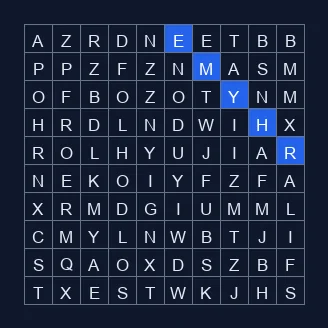
Diagonal and reversed paths are easy to skip if you only scan in one habitual direction; the highlighted example shows one straight-line word you might overlook on a fast pass.
Noticing these placements is where accuracy jumps most for intermediate players.
Avoiding Assumptions While Playing
A common mistake is deciding where a word “should” be before you have traced the grid.
- Do not limit yourself to horizontal lines when the rules allow vertical and diagonal paths
- Do not chase only long or familiar list words while short entries remain
- Treat every cluster of letters as worth a second look until that area is clearly done
Replacing guesses with methodical checks is one of the fastest ways to stop missing words in word search games.
Building Strong Observation Habits
Detail improves with repetition. The more word search puzzle games you finish cleanly, the better you get at spotting tiny differences in letter layout.
- Practice slow, deliberate scans on easier boards before chasing speed
- Study less obvious patterns—reversals, overlaps, rare letters—as separate skills
- Revisit sections that felt empty on the first pass
Solid habits make later puzzles feel calmer: you trust your process instead of hoping a lucky glance will find the last word.
Attention to detail is not a side skill—it is the foundation of reliable word search play. The more carefully you observe, the fewer words stay hidden, and the more satisfying each completed list feels. When you want practice with themed lists or your own vocabulary, try official word search puzzles or a custom grid on the site and treat each board as a chance to sharpen scanning discipline.
Frequently Asked Questions
Does going faster mean I have better attention to detail?
Not usually. Speed without coverage creates misses. Build accuracy first; pace naturally quickens once your scan pattern is consistent.
Why do I keep missing backward or diagonal words?
Many players default to one reading direction. Train yourself to trace each allowed line both forward and backward, and to run diagonal passes when the puzzle rules include them.
Should I mark found words on the grid?
Yes. Marking clears visual noise, shows which letters are already “used” in an overlap, and keeps your mental map honest for rechecks.
Are word search games the same as crosswords?
No. Crosswords use clues and blank squares to fill in. Word search puzzles ask you to find whole words already placed along straight paths in a letter grid.