





Beginner’s Guide to Word Search Puzzle Games
Word search puzzle games ask you to find listed words hidden along straight lines in a letter grid. They are easy to pick up, work well for short breaks or longer sessions, and suit players of almost any age. This guide covers what the puzzle is, how the grid and word list fit together, and a few habits that help on your first dozen puzzles.
What Are Word Search Puzzle Games?
A word search (also called a word find) gives you a grid of letters and a list of words to locate. Each hidden word runs in one unbroken line through adjacent cells—forward, backward, up, down, or diagonally, depending on the puzzle rules. You are not filling in blanks from clues like in a crossword; you trace straight paths through letters that already appear in the grid.
Typical puzzles allow up to eight directions: left-to-right, right-to-left, top-to-bottom, bottom-to-top, and the four diagonals. Some beginner-friendly sets use only horizontal and vertical words; harder puzzles add diagonals and reversed spellings.
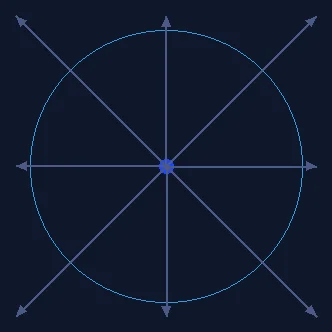
Straight-line directions include the four cardinals and four diagonals; easier puzzles often omit some of them.
Why Play Word Search Games?
- Builds calm focus and sustained attention
- Trains visual scanning and pattern recognition
- Reinforces spelling and vocabulary, especially with themed word lists
- Offers a low-pressure puzzle you can pause and resume anytime
You can play solo or swap tips with friends; either way the format stays simple.
Understanding the Grid
Before you hunt for words, skim the grid size and the word list. Smaller grids (for example 10×10) are gentler; larger boards pack more letters and usually take longer. Themed lists—animals, food, holidays—give you context so unfamiliar words feel less random.
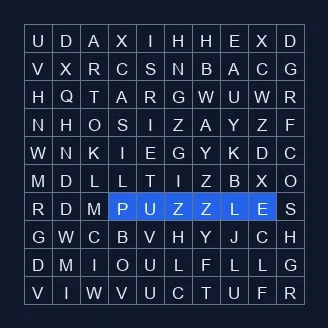
A found word is always one continuous line of cells, whether you read it forward or backward along that line.
Key Elements to Observe
- Grid dimensions and how dense the letters feel
- Which directions the puzzle allows (check the instructions once)
- Whether the list is sorted by length or theme, which can hint at difficulty
Noting these upfront saves you from re-scanning after you discover that backward or diagonal words are in play.
Basic Strategies for Beginners
You do not need advanced tactics on day one. These three habits cover most early puzzles.
Scan for Unique Letters
Letters such as Q, X, and Z appear less often. Spotting one narrows the grid quickly; follow the line in each allowed direction to see if a list word completes.
Focus on One Word at a Time
Pick a word from the list, search for its first letter (or its rarest letter), then trace every legal direction from that cell until the full spelling matches or you rule that spot out. Switching words every few seconds scatters attention.
Mark Found Words
Cross words off the list and mark the grid—highlight, underline, or use in-game selection—so you do not chase the same word twice. That keeps the remaining list honest and your progress visible.
Gradually Increase Difficulty
When comfortable with small grids and simple direction sets, try larger boards, themed packs, or puzzles that include diagonals and backward words. Optional timers can add pressure, but timing is a separate skill; learn accurate scanning first.
On this site you can explore official themed word search puzzles or build a custom grid when you want a list that matches your mood or vocabulary goal.
Tips for Enjoying Word Search Games
- Pause every fifteen to twenty minutes to rest your eyes
- Use even lighting and a comfortable screen distance
- Compare row-by-row scanning with column passes and keep what feels natural
- Track which puzzle sizes and themes you enjoy before chasing speed
Practice Makes Perfect
Speed and confidence grow with repetition. Regular play makes common letter pairs and word shapes easier to notice, so the same grid size feels lighter after a week or two of casual practice.
Word search puzzle games reward patience: learn the grid, use one-word focus and clear marking, then step up size and directions when you are ready. That steady path turns a confusing letter square into a familiar, satisfying word find.
Frequently Asked Questions
Do I need to know every word on the list?
No. Themed puzzles often teach new vocabulary. Use length, first letter, and rare letters as anchors even when the meaning is new.
Are word search games the same as crosswords?
No. Crosswords use clues and empty squares to fill in. Word search puzzles only ask you to find whole words already placed along straight paths in the grid.
What grid size should a beginner start with?
Many players begin around 10×10 or 12×12 with a short list and only horizontal and vertical words. Add diagonals and backward words after those feel comfortable.
Is speed important for beginners?
Accuracy matters more at first. Finish cleanly, then shorten breaks between words if you want a faster rhythm.