





Benefits of Playing Word Search Games Online
Browser-based word search and word find puzzles bring the classic letter-grid hunt to any screen: tap or click to trace straight paths through the noise, clear a word list at your own pace, and close the tab when you are done. Compared with print-only books, the online format adds practical conveniences while keeping the same calm, scan-and-match rhythm players already enjoy on paper.
This guide outlines why many people reach for word search puzzle games online—for sharper visual habits, light mental engagement, stress-friendly play, and access that fits a busy day.
Improves Visual Attention and Focus
Every puzzle asks your eyes to sweep a crowded grid without giving up the thread. Online play keeps that job on a bright, legible board you can zoom or scroll if needed, which helps players sustain visual attention longer than crammed newsprint sometimes allows.
How It Helps
- Encourages efficient row, column, and diagonal sweeps
- Trains you to lock onto letter runs that might match the list
- Holds attention on one board instead of context-switching
With steady practice, word search games can make everyday visual scanning feel a little quicker and more deliberate—not magic, but a real skill you repeat hundreds of times per grid.
Enhances Pattern Recognition Skills
Hidden words are straight paths through filler letters. The “aha” moment is pattern recognition: your brain spots a familiar spelling shape amid chaos.
Key Improvements
- Faster matching of letter sequences to words you know
- Growing intuition for prefixes, doubles, and rare letter pairs
- Better comfort on dense grids where overlaps multiply decoys
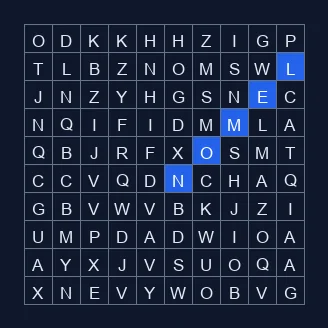
A highlighted diagonal path shows what online word search rewards: trace a straight line of letters (“LEMON” here), confirm it against your list, and move on—again and again until the board is clear.
Supports Cognitive Stimulation
Word search puzzle games are not clinical brain training, and they are not crossword-style fill-ins. They still offer light mental exercise: you hold the list in working memory, plan your next scan, and adjust when a promising cluster turns out wrong.
Mental Benefits
- Gentle use of recall (“which words remain?”)
- Active problem-solving through scanning habits
- Structured thinking with a clear finish line
That low-pressure stimulation is easy to repeat—one reason players return for a second puzzle after lunch.
Encourages Stress Relief and Relaxation
Many people open a word find for the same reason they might flip through a magazine: predictable rules, no audience, and progress you can see on the page.
Why It Is Relaxing
- Simple mechanics—find listed words along allowed directions
- Repetitive scanning can feel meditative when you are not rushing
- Most titles skip punishing timers, so mistakes cost time, not scores
Online word search puzzle games fit short breaks: one grid between meetings, a few minutes before bed, or a quiet pocket on a commute.
Provides Instant Accessibility and Convenience
Digital delivery removes friction from the hobby. You do not need a printed book, sharp pencil, or flat tabletop—just a device and a few spare minutes.
Convenience Features
- Start instantly without printing or shipping delays
- Play on phone, tablet, or desktop with the same core rules
- Jump between themed lists, grid sizes, or difficulty levels when the app offers them
That convenience makes it easier to build a word search habit around real life instead of reserving a desk drawer for puzzle magazines.
Improves Concentration Over Time
Focus is a practice skill. Each session asks you to ignore tempting false paths, finish sweeps you started, and resist tab-hopping until the list is empty.
How Concentration Improves
- Fewer mid-scan interruptions when you treat the grid as one task
- Stronger stamina for longer boards or trickier overlap zones
- Transferable patience for other screen work or reading that needs steady eyes
Players who play regularly often notice they settle into a puzzle faster—not because the letters got easier, but because their attention routine did.
Suitable for All Age Groups
Online word search games stay approachable across ages: the rules are easy to explain, difficulty can scale with grid size and word count, and no niche trivia is required to begin.
Why They Are Inclusive
- Beginner-friendly basics—scan, highlight, check off
- Adjustable challenge from kid-sized boards to dense adult grids
- No specialized domain knowledge unless you choose a themed list
Families can share the same format with different lists, and seniors enjoy large-type digital grids when vision needs a boost.
Encourages Independent Learning
Self-paced online play supports learners who want vocabulary contact without flashcards or drills. The puzzle does the pacing; you choose when to hint, pause, or start fresh.
Learning Benefits
- Progress at your own speed without a classroom clock
- Reinforce spelling through recognition in context
- Explore themed word lists (animals, travel, holidays) that introduce related terms
The vocabulary angle stays subtle—exposure and recognition rather than graded lessons—but it stacks quietly over many solved grids.
Final Thoughts
Playing word search games online combines mental, emotional, and practical upsides: sharper scanning, pattern sense, gentle cognitive engagement, stress-friendly rhythm, and play anywhere convenience. The format stays simple on purpose—straight-line paths in a letter grid—so it remains both entertainment and a repeatable focus exercise.
When you want another board without setup, pick a theme that matches your mood or spin up a custom list and treat the next puzzle as a short, satisfying reset for your eyes and attention.