





Benefits of Playing Word Search Puzzle Games
Word search and word find puzzles look simple on the page—a letter grid and a word list—but that setup can quietly train scanning, attention, and language habits. You circle or highlight words along straight paths (horizontal, vertical, or diagonal, depending on the puzzle). That is line-and-list play, not crossword-style fill-ins.
Whether you solve one grid on a break or work through a themed pack, the format stays low pressure while still asking your eyes and mind to stay on task.
Improves Visual Scanning Skills
A core benefit of word search play is sharper visual scanning. You move your eyes across rows, columns, and diagonals, hunting letter sequences that match the list.
Repeat that hunt and you tend to:
- Spot familiar letter runs faster
- Cover a large grid with fewer wasted passes
- Miss fewer small details in cluttered layouts
Those habits carry beyond puzzles—any task that needs careful reading of visual detail can feel a little easier after regular practice.
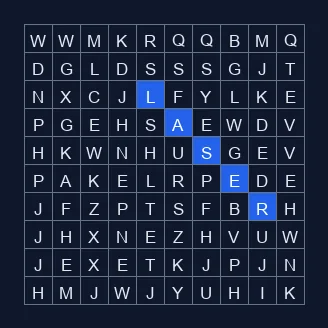
A highlighted straight path shows what repeated scanning builds: tracing letters through filler noise, matching a known word (“LASER” here), and moving on—dozens of times per puzzle.
Strengthens Pattern Recognition
Word search games lean on pattern sense more than full-sentence reading. You look for known spellings inside a noisy field of letters.
With practice, players often notice sooner:
- Common prefixes and suffixes
- Doubled letters and repeating chunks
- Unusual consonant clusters that stand out
Faster pattern checks are one reason experienced solvers finish the same size grid in less time—not because the puzzle got easier, but because recognition got smoother.
Enhances Focus and Concentration
Solving a word search takes sustained attention. Even an easy grid floods you with similar-looking letters; drifting for a moment can mean re-scanning whole sections.
Regular play helps you:
- Hold concentration a bit longer on one task
- Ignore distracting letter clusters that are not real words
- Stay with the puzzle instead of multitasking around it
Because you set the pace, word search is a comfortable place to practice focus without a ticking clock.
Supports Vocabulary Development
Themed word lists expose you to related vocabulary in context—nature, food, holidays, hobbies, and more. That makes word search useful for learners who want language contact without drill worksheets.
You may pick up:
- Topic words you rarely see elsewhere
- Spelling patterns through repeated grid sightings
- Familiar roots in new compound forms
It is reinforcement and exposure, not a full language course—but themed grids can nudge vocabulary in the direction you choose.
Encourages Logical Thinking
Word search is not a formal logic puzzle, yet solvers still build habits: scanning row by row, starting with rare letters, clearing short words before long ones, or working one region before jumping around.
Those choices support:
- A more organized search plan
- Better use of time on dense boards
- Light strategic thinking without heavy rules
The same habits transfer to other pencil puzzles and everyday problems that reward a steady method.
Provides a Relaxing Mental Break
Many players value word search most for calm focus. The task is engaging enough to pull attention away from stress, yet gentle enough for a short break between meetings or study blocks.
Unlike high-intensity games, a grid lets you:
- Play at your own speed
- Pause and resume whenever you like
- Enjoy progress without leaderboard pressure
That rhythm makes word search a practical unwind after a busy stretch—or a mindful pause before the next task.
Builds Patience and Persistence
Not every list word jumps out on the first pass. Some hide on awkward diagonals or share letters with overlapping entries.
Sticking with a stubborn word teaches you to:
- Stay calm when progress slows
- Try a different sweep pattern
- Keep looking when the answer is not obvious yet
That steady persistence is a benefit in its own right—on the grid and off it.
Suitable for All Skill Levels
Word search stays accessible because difficulty scales. Smaller grids and shorter lists suit beginners; larger boards, tighter overlaps, and trickier directions challenge experienced solvers.
- Beginners can start with compact grids and common words
- Advanced players can chase bigger boards and niche themes
You can grow skill gradually without the puzzle format suddenly feeling punishing.
Easy to Integrate Into Daily Life
A single word search rarely demands a long block of time or special equipment. One puzzle may take a few minutes; a longer session is optional.
That fits commutes, coffee breaks, waiting rooms, or quiet evening minutes—anywhere you can glance at a grid on paper or screen.
A Balanced Combination of Fun and Mental Activity
Word search sits in a sweet spot: simple rules, clear finish line, yet enough letters and directions to feel like a small challenge each time.
For many players, that mix is why they return. Each puzzle is a pocket of focus, a bit of pattern practice, and a quiet win when the last word on the list is found—benefits that add up when play becomes a habit.