





The Best Order to Find Words in Word Search Games
The order you tackle the word list changes how fast you finish and how many spellings you miss. No single sequence fits every board, but most steady solvers on straight-line word search and word find grids follow a loose ladder: obvious matches first, straighter paths next, longer anchors in the middle, then diagonals and reverses once the clutter drops—not crossword clue work, just ordered scanning on a letter grid.
Start with Distinctive Words
Early momentum matters. Before you commit to a full sweep, grab entries that pop against random filler.
- Rare letters such as Q, Z, or J often stand out in a single glance
- Double letters or unusual pairs create a shape that is easy to spot
- Short list words that read as tight clusters free cells fast and shorten the remaining count
A few quick clears make dense word search puzzle games feel manageable instead of overwhelming.
Scan for Straight-Line Words First
After distinctive picks, many players clear horizontal and vertical paths before chasing slants. On standard list puzzles those lines follow predictable reading directions—left to right, top to bottom, and their reverses when rules allow.
- Row and column passes cover a lot of board with less mental rotation
- Straight paths are easier to verify against the list while you are still warming up
- Marking them early thins visual noise for what comes next
Prioritizing straighter orientations is a practical default in word find grids when you are building a repeatable order.
Focus on Longer Words Next
Long spellings often become easier once shorter neighbors are gone. They also act as anchors: one long match can fence off a band of letters and hint where related list entries hide.
- Hunt distinctive starts or endings when the whole word feels heavy
- Watch for repeated fragments inside the grid that might extend into a full list line
- Chunk mentally—three or four letters at a time—until the full path clicks
Because long words span more cells, even a partial read can lock onto the complete straight path quickly.
Search Diagonal and Reversed Words Last
Diagonal bands and backward spellings usually cost the most attention. Saving them for later lets you work on a calmer board.
- Fewer competing paths stay unmarked once straighter finds are done
- You can devote whole passes to slants or reverse shapes without re-fighting horizontal clutter
- Open filler regions left after earlier clears become reference zones for subtle paths
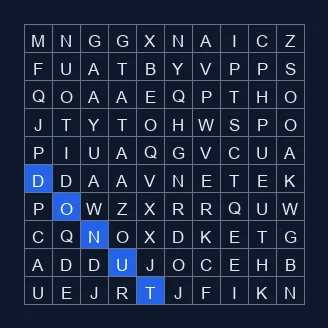
A diagonal highlight is a reminder that tricky orientations deserve their own pass—after easier words have cleared the grid, not mixed into random hops across every direction at once.
This stage rewards patience and slower, sectioned scanning more than speed drills.
Recheck the Grid Systematically
When the list count is nearly zero, assume one entry is still hiding. A structured final pass catches overlaps and half-seen fragments.
- Row-by-row or column-by-column coverage of anything not recently searched
- A second look at border rows and columns, where short words often tuck in
- List-to-grid compare: every unchecked line gets one honest sweep
That closing habit matters most on dense word search puzzles where words share letters and slant through the same tight clusters.
Why Order Matters
A deliberate sequence is not rigidity—it is a way to spend attention where payoff is highest first.
- Less visual chaos as marked paths accumulate
- Gradual difficulty so hard orientations land when you still have focus left
- Fewer wasted random peeks at cells you already cleared
Over time you will bend this ladder to fit your speed goals, board size, and whether the puzzle is timed. Keeping a default order makes those tweaks intentional instead of accidental.
A thoughtful solve order makes word search games more engaging on large or themed boards: you finish faster without the late-game frustration of hunting one backward three-letter word in a noisy corner.
Frequently Asked Questions
Is there one correct order for every word search puzzle?
No. Grid density, list length, and which directions are allowed all shift the best opening move. The ladder in this guide—distinctive and short, then straight lines, then long anchors, then diagonals and reverses, then recheck—is a flexible default you can shorten or reorder when a particular board demands it.
Should I always find long words before short ones?
Not always. Long words anchor space and are worth grabbing early when they are visually loud. Short words clear noise fast and are ideal openers when the grid is crowded. Many solvers blend both: a few quick shorts, one long anchor, then the rest by orientation.
When should I switch from horizontal passes to diagonals?
After straight paths get a fair dedicated pass and the list still has entries that refuse row/column shapes. If your rules include diagonals, treat them as their own phase—same as backward lines—instead of mixing every direction on the first sweep.
Does solve order matter in timed word search games?
Yes, especially near the clock. Winning quick passes on distinctive and straight-line words first builds time for slow diagonal hunts at the end. Random order often burns seconds rechecking cells you could have cleared in a structured first pass.