





Common Word Search Puzzle Themes
Themed word search and word find puzzles pair a straight-line letter grid with a focused word list—nature, holidays, travel, hobbies, and dozens of other topics players already care about. Browsing common word search themes helps you pick puzzles that match your mood, guess likely entries before you scan, and spot why some lists feel easier than others even on the same grid size.
Nature and Animals
Nature-themed word search puzzle games are among the most popular in print and online. Lists often mix animals, plants, weather, habitats, and outdoor vocabulary—eagle, forest, tundra, monsoon, and similar staples.
These sets appeal across ages: kids learn spellings while adults get a calm, familiar scan. Designers usually keep entries recognizable so the theme teaches lightly without turning the grid into specialist jargon.
Food and Cooking
Food lists are a close second in popularity. Ingredients, dishes, spices, kitchen tools, and regional cuisine names fill the word bank—fruits, grains, desserts, and international labels that cookbooks and classrooms reuse year after year.
The overlap between short pantry words and long recipe names is what makes culinary themes feel lively: one puzzle might hide rice beside spaghetti, so you alternate quick wins with longer paths.
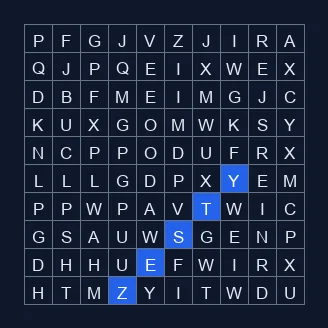
A diagonal highlight shows how a food-themed board still works like any word find: trace one straight spelling (“ZESTY” here), mark it on your list, and keep scanning. Theming only changes which words you expect—not how paths work in the grid.
Holidays and Celebrations
Seasonal and holiday word search puzzle games spike around major events: Christmas, Halloween, Easter, Thanksgiving, Valentine's Day, birthdays, and national observances. Vocabulary leans festive—decorations, foods, symbols, and greetings people already hear in the culture.
Because many solvers share the same references, holiday lists often feel easier in December or October even when the grid settings match a generic puzzle. Timing is part of the theme effect.
Geography and Travel
Geography and travel themes push countries, cities, landmarks, rivers, capitals, and tourist sites. They work well in classrooms and for armchair travelers who like place names on a screen or page.
Longer proper nouns and rare letter pairs can slow scanning compared with animal or food lists, but familiar maps-and-travel branding still gives you strong first-letter guesses (PA- for Paris, NI- for Nile) before your eyes confirm the full path.
Entertainment and Pop Culture
Movies, music, television, books, games, and celebrity names fuel another large category. Pop-culture word find puzzles attract fans who enjoy spotting titles and character names they already know.
Difficulty here is personal: a blockbuster theme is brisk if you have seen the films; the same grid frustrates someone outside that fandom. Theme choice is as much about audience as about grid size.
Science and Education
Educational word search puzzle games cover science, history, math vocabulary, language arts, and exam-prep glossaries. Space, biology, chemistry, physics, and dated historical terms appear together on many school handouts.
These lists add recall work on top of visual search—you may need to remember a term before you can hunt it efficiently—or discover spelling only after you trace letters in the grid. That dual load is intentional for vocabulary practice.
Hobbies and Activities
Sports, art, music, gaming, gardening, fitness, and crafts show up whenever publishers want a theme close to everyday leisure. Hobby lists connect with what players already do off the board, which boosts engagement without exotic vocabulary.
Because hobby words often share stems (paint, palette, piano, pitch), themed boards in this category can look visually busy—another reason to read the full list once before you sweep rows and columns.
Final Thoughts
Common word search themes—nature, food, holidays, geography, entertainment, STEM and history, hobbies—shape vocabulary, pacing, and how crowded the grid feels, not the core rule of finding whole words along allowed straight paths. Rotate topics to match your session: cozy recognition, travel names, festive lists, or a vocabulary stretch. When a theme matches your interests, scanning stays calmer and each marked word feels like a small win.
Frequently Asked Questions
What is the most popular word search theme?
Nature and animals, food, and holidays consistently rank high because vocabulary is broad, family-friendly, and familiar. Pop culture and geography follow close behind for classroom and casual play.
Do themed word search puzzle games use different rules?
No. The list and label change; you still find listed words along straight paths (horizontal, vertical, and diagonal when enabled) in a letter grid. Themed puzzles are not crossword fill-ins.
Why does a food or holiday theme feel easier?
Shared cultural exposure means more predictable words and spellings. The grid may match a “harder” size, but recognition shortens blind scanning.
Can science or history themes be harder than animal lists?
Often yes, when terms are long, technical, or unfamiliar. You trade easy shape matching for vocabulary recall.
Are travel and geography themes only long words?
Not always—many mix short compass and habitat terms with long place names. Scan time still rises when multi-syllable entries dominate the list.
How do I pick a theme for practice?
Match the theme to your goal: relaxed play (holidays, hobbies), vocabulary stretch (science, history), or pattern drills (food and nature with mixed word lengths). Read the word list once, then scan with a steady path instead of random jumps.