





Daily Word Search Puzzle Games
A daily word search (word find) drops a fresh letter grid and word list on a predictable schedule—often once per calendar day. That small ritual turns casual scanning into something players return for: a quick win they can finish between tasks, a streak counter that nudges them tomorrow, and themed lists that still follow the same straight-line rules as any classic puzzle. This guide explains why daily formats boost engagement and how to keep the habit light instead of stressful.
Why a Fresh Grid Each Day Matters
Daily word search puzzle games work because novelty stays bounded. You get a new board, but the mechanics never change: trace whole words along allowed straight paths, check them off the list, and finish when the grid is clear.
That mix supports:
- Routine without homework vibes—five or ten minutes at the same time of day
- Quick closure—most dailies are sized for one sitting, not a weekend project
- Anticipation—tomorrow’s list is unknown today, so the return visit has a hook
Unlike endless random boards with no anchor, a dated daily puzzle feels like a shared beat: “today’s grid” exists whether you solve it at breakfast or before bed.
Habits, Streaks, and Gentle Motivation
Engagement on daily word find puzzles often comes from streaks and light progress history. Seeing five, ten, or thirty consecutive days completed gives a reason to open the app even when you are tired—finishing takes less effort than breaking the chain.
Healthy daily habits usually share a few traits:
- Forgiving misses—some products offer streak freezes or soft resets so one busy day does not punish months of play
- Visible word counts—“3 of 12 found” is easier to resume than guessing where you left off
- Optional timing—untimed dailies suit commute calm; timed variants appeal to players who want a score without changing the grid rules
The goal is a habit loop you control: cue (new puzzle notification or morning coffee), short play, small satisfaction—not guilt when life gets in the way.
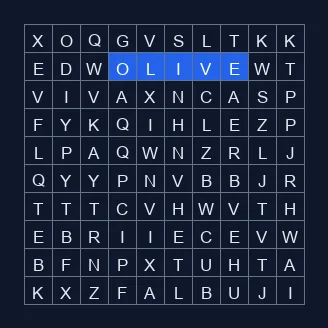
A horizontal highlight shows the everyday job in any daily word search: one straight spelling (“OLIVE” here), one list check-off, then the next entry. Streaks track how often you finish that loop—not how fancy the rules are.
Themed Lists and Rotating Variety
Themed daily word search games prevent list fatigue. Monday might lean travel, midweek might pull food vocabulary, and seasonal dailies spike around holidays without rewriting how words hide in the grid.
Rotation helps engagement because:
- Familiar words on cozy themes feel like easy wins early in the week
- Niche lists stretch vocabulary without making the grid itself harder
- Shared culture—holiday or sports weeks give solvers inside references to hunt for
Themes change what you search for, not how paths work. Diagonal and backward entries still depend on that puzzle’s rule set; a daily format does not turn word search into crossword fill-ins.
Balancing Challenge and Accessibility
Daily puzzles must stay inviting day after day. Boards that are always tiny grow dull; boards that jump to expert density every Friday burn players out.
Features that keep daily word search puzzle games accessible include:
- Stepped difficulty—easier Mondays, tighter grids later in the week, or player-chosen tiers
- Adjustable grid size and word count when the platform allows it
- Hints or reveal-one-word tools that rescue a stuck list without auto-solving the whole board
- Clear rules on directions (horizontal, vertical, diagonal, reverse) so today’s surprise is vocabulary, not hidden mechanics
The best dailies feel repeatable: hard enough to notice you are thinking, easy enough to finish on a normal weekday.
Light Social Layers (Optional)
Many daily word search titles add optional social compare—shared completion times, weekly leaderboards, or “everyone got the same grid today.” Those layers reinforce streaks because friends notice when you skip—but they should stay sideline, not mandatory.
Social features help when they celebrate finishing, not when they shame slow scanning. For most players, the core motivator remains personal: clear the list, keep the streak, enjoy one more themed board tomorrow.
Final Thoughts
Daily word search puzzle games succeed by pairing fresh grids with stable rules. Streaks and themed rotation supply novelty; short sessions and forgiving tools keep the habit sustainable. Treat each day as one straight-line hunt through letters—not a test you must ace.
When you want a dated challenge without hunting for printouts, open a themed daily word search on word-search-puzzles.com, finish at your pace, and let the next grid wait until tomorrow.
Frequently Asked Questions
What makes daily word search different from unlimited random puzzles?
A daily puzzle is calendar-bound: one official board per day (or per release window). Random modes never run out, but they lack that shared “today’s puzzle” moment that streaks and reminders lean on.
Do streaks help or hurt casual play?
Streaks help when they are optional and forgiving—visual progress, not punishment. They hurt when missing a day feels like losing permanent status. Pick dailies that match how strictly you want to commit.
Can daily word search games stay relaxing?
Yes, if you choose untimed boards, modest word counts, and themes you enjoy. Skip competitive ladders when you want meditation-style scanning.
Are themed dailies harder than generic lists?
Usually not because of the theme itself. Difficulty comes from grid size, overlap density, and allowed directions. A holiday list may feel easier because the words are familiar, even on the same settings as a neutral puzzle.
Is a daily word search the same as a crossword?
No. Word search and word find puzzles ask you to locate listed spellings along straight paths in a letter grid. Crosswords use clue-driven fill-ins with intersecting answers. Daily formats exist for both genres; the rules stay distinct.