





Do Word Search Puzzle Games Improve Concentration?
Word search and word find puzzles feel relaxing on the surface, yet they still ask you to hold a word list in mind, scan a letter grid along straight paths, and ignore noise until the board is clear. That is not formal concentration training—and it is not crossword-style fill-ins—but it does rehearse habits that sit close to sustained attention and selective focus.
This guide separates what word search puzzle games actually exercise during play, where modest gains can show up, and what no casual grid can replace.
Continuous Visual Focus Is Required
One reason concentration comes up in word search conversations is the steady demand for visual attention: your eyes must move across the grid without losing place while your brain keeps checking letter runs against the list.
What Players Do
- Scan rows, columns, and diagonals in an orderly way
- Track letter patterns from start to finish of a candidate path
- Revisit sections instead of skipping past them at random
Those sweeps rehearse sustained visual focus—the kind you need whenever a task stays on screen for several minutes.
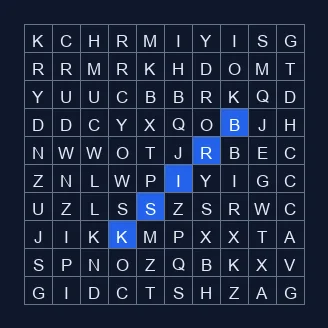
A highlighted diagonal path shows what sustained scanning looks like: you lock onto a straight line through filler letters, match them to a list word (“BRISK” here), and keep going—hundreds of small focus decisions per puzzle.
Selective Attention Is Constantly Used
Selective attention means tuning in to what matters (real word paths) while treating everything else as background.
How It Appears in Gameplay
- Filtering out letter clusters that cannot spell a list word
- Prioritizing shapes that match known spellings
- Ignoring decoy paths that look tempting but fail the list check
Word search games give you many reps of that filter in a low-stakes setting—useful practice for everyday “ignore the noise” tasks, not a clinical attention program.
Working Through Distractions Builds Focus
Dense grids are deliberately busy: filler letters, overlaps, and odd directions can pull your gaze sideways.
Common Distractions
- Similar-looking letters grouped in clusters
- Words that cross or share cells with others
- Entries placed vertical, horizontal, or diagonal when you expect the opposite
Learning to stay with your scan pattern despite those pulls is one of the clearest concentration benefits word search puzzle games offer during play.
Task Switching Strengthens Mental Control
You rarely lock onto one word for the whole solve. Attention shifts between list entries, grid zones, and scanning directions.
Examples of Task Switching
- Jumping from an easy short word to a stubborn long one
- Changing from row sweeps to column or diagonal passes
- Returning to a corner you checked once but did not finish
Controlled switching—not frantic jumping—keeps the puzzle moving. That balance supports cognitive flexibility without demanding true multitasking.
Short-Term Focus Training Happens Naturally
Even a calm word search still uses short bursts of tight focus: when a rare anchor letter appears, when two words overlap, or when you verify a tricky spelling.
What Happens in the Brain
- Briefly holding which words remain on the list
- Matching visual letter runs to memory of spellings
- Adjusting scan strategy when the first pass misses
These are light working-memory touches, not dedicated drills—but they still ask for present-moment attention.
Gradual Improvement Through Repetition
Like most skill habits, concentration effects show up gradually with regular play rather than after one heroic session.
Over Time, Players May Notice
- Faster scanning with fewer “where was I?” moments
- Less temptation to chase every random letter cluster
- More even attention across the full grid, not just the easy corners
Short, repeat sessions beat rare marathons when the goal is steadier everyday focus.
The Role of Pattern Recognition in Focus
Better pattern sense often looks like better concentration: you spend less time wandering because familiar chunks jump out sooner.
Why It Helps
- Recognized spellings shrink random hunting
- Quicker hits keep momentum and engagement high
- Fewer false paths mean less frustration and fewer scan restarts
As pattern checks smooth out, word search puzzle games can feel less tiring for the same grid size—your focus goes to remaining words, not to fighting the grid.
Limits of Concentration Training
Word search can support attention habits, but keep scope in view.
What They Do Not Do
- Replace structured cognitive or attention therapies
- Treat attention disorders or substitute for medical care
- Train deep multitasking the way demanding work environments do
Treat them as light, informal focus practice—pleasant and repeatable—not a prescription or a lab-grade training tool.
Age and Engagement Factors
Different players lean on the same skills in different ways.
General Observations
- Younger players build early attention routines through playful grids
- Adults often use a puzzle as a short focus break between tasks
- Older players may value gentle engagement without steep learning curves
Accessible rules and adjustable difficulty help word search games fit many ages for casual concentration practice.
Why They Feel Meditative for Some Players
Many people describe word search as calming or absorbing—a focused pocket in a noisy day.
Possible Reasons
- Repetitive scanning sets a steady rhythm
- The task narrows attention to one clear goal
- External interruptions matter less while the list still has words left
That absorbed state can feel like a temporary concentration boost even when the puzzle itself is easy.
Final Thoughts
Word search puzzle games can support concentration by encouraging sustained visual attention, selective filtering, controlled task switching, and short bursts of tight focus. They are not a substitute for formal training or clinical care, but they offer a simple, accessible way to practice staying on one task. Regular, enjoyable play may strengthen everyday attention habits more than any single “brain training” claim on the box.
Frequently Asked Questions
Do word search games improve concentration?
They can reinforce habits tied to sustained scanning, selective attention, and ignoring grid noise. Benefits are gradual and modest—not the same as structured attention training.
How long should you play to notice focus benefits?
Consistency matters more than duration. Several short sessions per week are enough for many players to feel smoother at scanning—without treating every grid like homework.
Are timed word search puzzles better for concentration?
Timed modes add pressure, which can sharpen focus for some players and scatter others. Untimed play still trains steady attention; pick the style that keeps you engaged rather than anxious.
Can word search help kids develop focus?
Age-appropriate grids and themes can give kids practice at letters, spellings, and staying with one task. Adults benefit from the same core skills at higher difficulty.
Do word search games help with ADHD or attention disorders?
They are casual games, not treatment. Enjoyable focus practice may be one small part of a broader routine, but diagnosis and care belong with qualified professionals.
Is concentration from word search the same as meditation?
Both can feel absorbing, but meditation is a deliberate practice; word search is a game with a clear finish line. Similar calm does not mean identical training effects.