





Expert-Level Word Search Game Strategies
Expert word search and word find play is less about raw speed than about reliable systems: full coverage in every allowed direction, pattern reads before blind sweeps, and calm prioritization on straight-line letter grids—not crossword fill-in work.
Seasoned solvers use the same habits on large boards, dense themed lists, and timed modes: scan with intent, park partial matches, and tighten weak spots through deliberate practice.
Master Multi-Directional Scanning
Beginners often default to rows and columns. Expert players treat each allowed orientation as trainable muscle memory—horizontal, vertical, both diagonals, and reverse paths when rules permit—without mixing them into one chaotic pass.
Tips for effective scanning
- Run finished sweeps per direction family instead of hopping on the first hunch
- Watch intersecting letters that could start more than one list entry
- Use a slightly wider visual field so slants and reverses register during row work
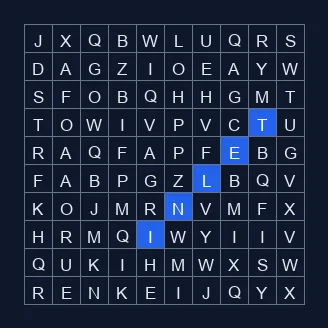
A diagonal highlight shows the kind of non-row path expert word search games expect you to own—one orientation at a time, not hoping a slant appears while you only reread horizontal bands.
Multi-directional discipline matters most on dense word search puzzle games where several straight paths can share the same filler band.
Develop Pattern Prediction Skills
Hard lists hide overlap, shared stems, and embedded shorter words inside longer spellings. Experts read letter context before they reread the whole board.
How to apply pattern recognition
- Note common prefixes, suffixes, and repeated double letters
- Guess plausible straight placements from neighbors you already cleared
- Use word families from the theme to shrink where unlikely segments live
Pattern prediction cuts duplicate passes and keeps word find sessions efficient on cluttered grids.
Optimize Grid Memory Techniques
Top solvers remember what they already checked and where loose clusters still wait.
Advanced memory approaches
- Split the board into quarters or bands and finish one zone before opening the next
- Park partial matches—a strong two- or three-letter start seen once, completed later
- Track which directions in each zone already got a full pass
Solid grid memory stops endless re-sweeps and speeds the last third of a puzzle.
Strategic Prioritization
Experts choose which list line to chase next based on overlap, length, and how much noise remains.
Prioritization methods
- Lead with long or high-cross words while open straight paths are easy to trace
- Save short cleanup words for when marked paths reduce distraction
- Let a hard anchor fence a region so easier neighbors surface indirectly
Deliberate ordering spends attention where the board still pays the highest return.
Incorporate Speed and Accuracy Drills
Even experts need rhythm. Timed word search modes reward fast pattern reads; untimed grids reward zero false positives.
Suggested drills
- Timed sets on progressively larger boards to stress coverage, not panic
- Accuracy rounds where a wrong mark costs a recount or reset
- Alternate speed and precision days so neither habit atrophies
Drills keep reflexes sharp without training sloppy confirmation on competitive word find lists.
Utilize Cognitive Visualization
Before dragging a cursor or pencil, many experts trace the likely path in mind—especially for long or diagonal entries.
Visualization strategies
- Picture word length against open strips in the zone you are working
- Mentally walk allowed directions from a strong anchor letter
- Plan the next scan band before you move eyes to a new corner
Short mental rehearsal reduces random wandering on unfamiliar layouts.
Exploit Thematic and Contextual Hints
Themed word search puzzle games bundle vocabulary by topic. The list itself is a map.
How to leverage context
- Group list entries by category and search where that topic’s letters tend to cluster
- Use meaning to expect stems (colors near color words, tools near tool words)
- Cross-check found words for shared letters that hint at siblings still hidden
Context narrows search space faster than treating every line as unrelated noise.
Continuous Practice and Analysis
Expert habits compound. Completion is a chance to audit process, not only celebrate the last word.
- Replay finished grids to spot missed angles or skipped zones
- Try new scan orders on familiar sizes to avoid one rigid route
- Log time and miss patterns on timed boards and adjust one variable at a time
Regular review turns these moves into default behavior on the hardest word search puzzle games you take on.
Frequently Asked Questions
How is expert word search strategy different from advanced play?
Advanced play builds structured passes, cluster reads, and directional scheduling. Expert play adds sharper prioritization under time pressure, stronger grid memory, thematic inference, and post-puzzle analysis so performance stays consistent on very large or dense boards.
Should I practice all eight directions every session?
Practice every direction your rules allow, each with its own completed sweep habit. You do not need a separate novelty drill for “eight” if your game excludes some paths—match training to the actual puzzle contract.
Do visualization and memory tricks replace scanning?
No. Mental tracing and zoning support systematic passes; they do not skip them. Experts still owe each allowed orientation a finished look in each zone.
Are timed drills necessary for expert-level word find play?
Not mandatory, but useful. Timed sets expose where coverage breaks down; accuracy sets expose false positives. Alternating both keeps speed and verification in balance.
Do these expert strategies work on paper and on screen?
Yes. Straight-line list puzzles share the same skills. Adjust for glare, zoom, and breaks on devices; scan order, prioritization, and pattern habits transfer directly.