





How Eye Movement Affects Word Search Game Performance
Your eyes, not just your pattern sense, set the pace in word search and word find puzzles. Every jump between letters and every brief pause on a cluster either builds steady coverage or wastes effort on empty repeats. When you understand how saccades and fixations shape a scan path, word search puzzle games feel more predictable—and less mentally tiring.
How the Eyes Scan a Word Search Grid
Smooth tracking across a board is an illusion. During play, vision hops from one spot to the next, rests for a fraction of a second, then hops again.
Key Eye Behaviors
- Saccades: quick jumps between fixation points
- Fixations: short holds while the brain reads a few letters
- Scan paths: the route you trace—orderly rows, columns, diagonals, or chaotic hops
Efficient movement keeps fixations on fresh cells and limits time spent re-reading the same band of letters.
The Problem with Random Eye Movement
Beginners often bounce across the grid without a plan. That feels active, but performance drops because coverage becomes uneven.
Common Issues
- Revisiting the same rows while whole sections stay untouched
- Losing track of which list words already had a dedicated pass
- Chasing false shapes that pull saccades off the systematic path
Random hops make word search games harder than the letter density alone would suggest.
Systematic Scanning Improves Performance
A repeatable path gives your eyes a job they can execute under fatigue: finish one direction, then the next, without guessing where to look.
Effective Methods
- Row passes: left to right, then right to left on the same lines when rules allow
- Column passes: top to bottom and bottom to top
- Diagonal passes when the puzzle permits slanted paths
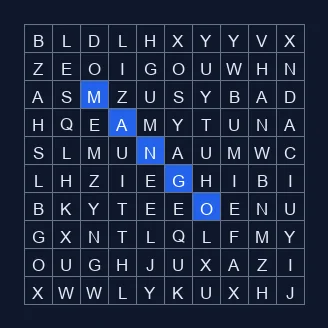
A disciplined diagonal trace keeps saccades on a single line instead of scattering across the board; the highlighted example shows one straight-path word your eyes can follow as a unit.
These habits reduce overlap between fixations and help you claim full grid coverage before you declare the puzzle done.
Peripheral Vision and Word Detection
You do not need to stare at every cell to notice a promising shape. Peripheral vision catches long word silhouettes and odd letter clusters while your focus sits on the active scan line.
How It Helps
- Long entries show as distinct bands at the edge of attention
- Unusual letters (Q, X, Z) pop against filler even before a full read
- You can aim the next saccade toward a hotspot instead of hunting blindly
Peripheral cues strengthen with practice—they reward calm scanning more than frantic jumping.
Eye Fatigue and Its Impact
Poor scan discipline accelerates visual fatigue. Once endurance drops, saccades get shorter and sloppier, and missed words climb.
Signs of Eye Strain
- Scan speed falls while mistake rate rises
- Small letters blur or swim after long fixation chains
- You abandon systematic passes and revert to random hops
Pairing structured movement with regular breaks keeps later passes as accurate as the first.
Training Better Eye Movement
Better paths are learned, not inherited. Short, focused sessions on easier grids beat marathon grinding with a chaotic gaze.
Helpful Techniques
- Commit to one scan direction per pass and finish it before switching
- Pause after each found word to reset fixation instead of leaping mid-row
- When focus drifts, look away briefly, then restart the row from a fixed edge
Over weeks, the same method feels automatic—and word search puzzle sessions need less forced concentration.
Eye Movement and Pattern Recognition
Recognition and movement reinforce each other. Stable fixations let letter sequences register; quick, purposeful saccades move you to the next candidate without rereading noise.
The Connection
- Consistent paths build a mental map of which zones are cleared
- Fewer random hops leave working memory free for list words
- Calm rhythm helps you catch reversed and diagonal spellings on the second look
Together, those effects matter more than raw “eye speed” for intermediate players.
Final Thoughts
Eye movement is an underrated lever in word search and word find performance. Structured scans, smart use of peripheral vision, and breaks before fatigue wins translate into faster, cleaner solves. Treat each grid as practice for where your eyes go next—not only for which word you spot first.
Frequently Asked Questions
Do faster eye movements always mean a faster solve?
Not necessarily. Rapid but random saccades often replay the same cells. Steady coverage with fewer fixations on filler usually beats jittery speed.
Should I scan rows, columns, or diagonals first?
Pick an order you can repeat every puzzle. Many players clear rows and columns first, then run diagonals and reversals as a second layer—what matters is finishing each pass, not the exact sequence.
Can peripheral vision replace close reading?
No. Peripheral glances suggest where to aim the next fixation; you still confirm each word letter by letter along the allowed path.
Why do I miss words when I am tired?
Fatigue shortens fixations and widens gaps between saccades, so whole bands get skimmed. Slow down, reset with a short break, or switch to an easier grid before pushing through blur.
Are word search puzzles the same as crosswords?
No. Crosswords use clues and blanks you fill in. Word search puzzles hide whole words on straight paths in a letter grid for you to find and mark.