





What Is the Fastest Way to Solve a Word Search Game?
Fast word search and word find solves rarely come from luck. Speed grows when you preview the list, scan the grid in a fixed order, and cut wasted eye movement. The puzzles look casual, but a repeatable process beats frantic hunting every time.
Start With the Word List First
Experienced solvers read the vocabulary list before they study the board.
Why This Helps
- You know the targets instead of guessing from random clusters
- Long or oddly shaped entries stand out when you picture them on paper
- Rare letters and doubles prime your eyes before the first pass
List-first work keeps the grid from feeling like a wall of identical letters.
Scan the Grid Systematically
Random hops are among the slowest habits. A band-by-band sweep finishes zones instead of revisiting the same empty cells.
Effective Scanning Methods
- Row passes: top to bottom, finishing each line before you jump
- Column passes when horizontal sweeps stall or the list favors vertical shapes
- One steady reading direction per pass so you never wonder “did I already clear this?”
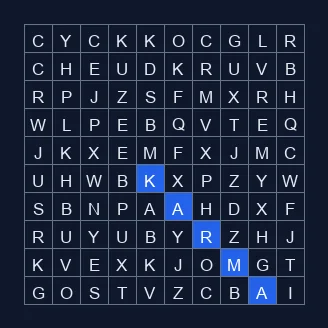
A single straight path—here on a diagonal—shows what systematic scanning chases: one coherent line of letters instead of scattered peeks. Finish one direction before you pivot.
Structured coverage prevents whole corners from staying untouched until the final frustrating pass.
Look for Unique Letter Patterns
Some entries announce themselves through spelling before you trace every cell.
What to Look For
- Rare letters such as Q, X, and Z
- Doubles like EE, LL, or SS that form quick visual anchors
- Unusual starting or ending letters that break up filler
Pattern spotting narrows the grid faster than reading every path letter by letter.
Focus on First and Last Letters
Boundary letters compress the search space on long or dense boards.
Strategy
- Hunt first letters of list words, then verify the line that follows
- Use last letters as reverse anchors when rules allow backward paths
- Connect start and end with short path checks instead of full-row rereads
Anchors let you reject false starts in a few cells rather than rereading entire rows.
Use Direction Awareness
Words in word search puzzle games can run horizontally, vertically, diagonally, and sometimes backward along those same straight lines. Speed comes from checking each allowed direction on purpose—not from assuming every answer reads left to right.
Common Directions
- Horizontal and vertical lines
- Diagonals when the puzzle permits angled paths
- Reversed spellings along any allowed line
Build a mental checklist of directions and run it before you mark a section “clear.”
Break the Grid Into Sections
Treating the whole board as one blob invites overlap and repeat scans.
Sectioning Technique
- Quarter the grid mentally or follow row blocks you can name (“top left done”)
- Finish one section’s passes before opening the next
- Note which list words might live in each zone based on length or rare letters
Sections turn an overwhelming field into a sequence of small, completable jobs.
Cross Out Found Words Immediately
Visible progress keeps effort on what is left, not on words you already proved.
Benefits
- Stops duplicate hunts for the same entry
- Frees attention for shorter or trickier list items
- Makes “how many remain?” honest at a glance
Striking through or marking finds is a small habit with a large payoff in timed play.
Prioritize Longer Words
Long entries span more cells, so they read as distinct shapes against filler.
Why This Works
- They cross more of the grid and can intersect other answers
- Fewer placements fit a long spelling, so wrong paths drop away quickly
- Finding one long word sometimes reveals pieces of shorter neighbors
Many fast solvers attack the longest list items early, then mop up short words on a second pass.
Avoid Over-Focusing on One Area
Getting stuck on a single stubborn word eats minutes better spent elsewhere.
Better Approach
- After a short, honest try, park the word and continue the systematic sweep
- Return with fresh eyes after other finds have removed visual noise
- Keep overall coverage moving—finished bands beat heroic staring
Rotation prevents one blind spot from freezing the entire solve.
Train Your Peripheral Vision
You do not need a fixation on every cell to notice a promising silhouette.
How It Helps
- Long words register as bands at the edge of attention while you follow a scan line
- Rare letters can pop against filler before you commit a full read
- Peripheral cues suggest where to aim the next deliberate pass
Peripheral skill builds with regular word find practice—calm rhythm helps more than frantic zooming.
Keep a Consistent Rhythm
Stop-start solving resets momentum and reopens gaps you already cleared.
Tips for Rhythm
- Finish the current band before you celebrate a single find
- Keep the list and grid in steady alternation—mark, scan, mark
- In timed modes, prefer continuous coverage over micro-pauses after every word
Flow protects both pace and accuracy when the clock matters.
Why Speed Improves With Practice
The fastest routes become automatic after enough puzzles with the same method.
- Familiar word shapes need less conscious decoding
- Eye paths shorten as you trust row, column, and diagonal passes
- Anchors and sectioning feel natural instead of forced
Regular play turns deliberate technique into reflex—without replacing careful final checks.
A Balanced Approach to Speed Solving
Pure speed loses when it skips directions or skips the word list at the end. The best runs pair systematic scanning, pattern anchors, rhythm, and a quick accuracy pass before you stop the timer.
Over time, those habits let you finish word search puzzle games faster while still trusting every mark on the list.
Frequently Asked Questions
Should I read the word list or scan the grid first?
Read the list first to know targets and shapes, then let structured grid passes do the finding. The list sets intent; the grid supplies evidence.
What scan order is fastest for word search games?
Any order you can repeat every puzzle—often rows, then columns, then diagonals and reverses as allowed. Finishing each pass beats picking a “perfect” sequence once and abandoning it.
Are long words or short words better to find first?
Long words usually go first because they stand out and clear large areas. Save very short entries for a closing sweep after the grid is quieter.
Does rushing help in timed word find puzzles?
Rushing without coverage replays easy zones and skips whole directions. Speed up only after your scan pattern reliably hits every band.
Are word search puzzles the same as crosswords?
No. Crosswords fill blanks from clues. Word search puzzle games hide whole words on straight paths in a letter grid for you to find and mark—no clue-driven fill-ins.