





What Is a Hidden Message Word Search Puzzle Game?
A hidden message word search puzzle game is a word find variant with a second payoff after the word list is clear. You still trace hidden spellings along straight paths in a letter grid—the same core loop as classic word search, not crossword fill-ins. Once every list word is found, a secret sentence or phrase appears when you collect letters according to the puzzle’s extraction rules.
That two-step structure turns a familiar hunt into a short decode: find the words first, then assemble the message from the leftovers or marked cells.
How a Hidden Message Word Search Puzzle Game Works
The board looks like a standard word search: random filler letters, a published word list, and answers on allowed straight lines (horizontal, vertical, and diagonal only when the rules say so). The twist is an extra objective printed on the title or instructions—what to do with specific letters after the list is complete.
Basic flow
- Find and mark every word on the list using normal word search rules.
- Pull out letters defined by the puzzle (first letters, highlighted cells, unused squares, or a fixed read order).
- Read the collected letters in the stated sequence to reveal the hidden message.
The message usually stays unknown until the word hunt finishes, which keeps players checking both the grid and their notes.
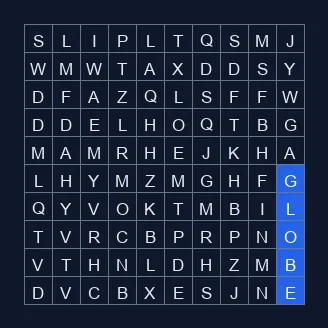
Step one still looks like everyday word find play: straight paths through random letters. The hidden message lives in step two—rules that tell you which letters to keep once the list is done.
How the Hidden Message Is Formed
Publishers use several extraction patterns. The word list and grid stay the same; only the letter rule changes how carefully you track progress.
Common setups include:
- First or last letter of each found word — often sorted in list order for an acrostic-style reveal
- Marked letters inside words — one or more cells per answer are flagged on the worksheet
- Unused grid cells — every letter not part of any word reads out in a given path (popular in classroom handouts)
- Fixed sequence after completion — for example, read marked coordinates in number order
Each method shifts where mistakes hurt. Wrong word highlights can throw off acrostics; skipped unused letters break leftover-message puzzles.
Why Hidden Messages Are Used in Word Search Games
The extra layer gives players a reason to finish carefully instead of stopping at “most of the list.”
Designers like it because it:
- Adds a clear second goal beyond crossing off words
- Builds curiosity about the final phrase
- Rewards precise marking and rule-following
- Delivers a stronger “done” moment when the sentence clicks
For kids or themed events, the message can be a joke, a clue, or a vocabulary review line tied to the puzzle topic.
Difficulty Level of Hidden Message Word Search Puzzle Games
These puzzles usually feel harder than plain word search at the same grid size, even when the word list is short.
Difficulty spikes because:
- You juggle two tasks—scanning for words and remembering extraction steps
- A mis-found word can poison the message if rules tie letters to specific answers
- Unused-letter variants demand full grid awareness, not just list chasing
A 10×10 board with ten easy words can still feel stiff if twenty unused letters must be read in order without a typo.
Cognitive Skills Involved
Hidden message word search puzzle games train the same visual skills as standard word find—scanning, pattern spotting, spelling checks—plus light sequencing and working memory.
You may need to:
- Keep extraction notes aligned with the word list order
- Recall which cells count before you erase a trial mark
- Read the final string as language, not just scattered letters
The blend keeps sessions mentally active without leaving the straight-line word search format.
Player Experience and Engagement
Many players describe three phases:
- Hunt — systematic passes for list words
- Decode — gather and order message letters
- Verify — read the phrase aloud or compare to a hint
That arc feels more like a mini mystery than a single checklist, which suits players who want word search relaxation plus a small “aha” at the end.
Educational Value of Hidden Message Word Search Games
Teachers and publishers use the format when vocabulary practice should end in a memorable line—a motto, a fact, or a spelling principle spelled out by the extracted letters.
Benefits in learning settings:
- Reinforces careful reading of instructions before scanning
- Connects thematic word lists to one summary phrase
- Adds a logic-style step without switching to a different puzzle family
The grid mechanics stay line-based word search throughout; only the follow-up task changes.
Strategy Tips for Solving Hidden Message Puzzles
Organized habits prevent rework when the message rules are strict.
Useful approaches:
- Read the extraction rule once and note it beside the word list
- Mark found words in list order when first letters matter
- Capture message letters as you go if the puzzle allows partial credit
- Slow down on the final pass—double-check unused cells or marked coordinates
- Re-read the revealed phrase; one transposed letter often points back to a wrong word
Treat the message layer as part of the win condition, not an optional bonus.
Why Hidden Message Word Search Puzzle Games Are Popular
Players who enjoy classic word find but want more payoff often reach for hidden-message editions.
They offer:
- A mystery line on top of familiar grid play
- Higher replay interest when the same theme ships multiple secret phrases
- Shareable moments when the decoded sentence is a punchline or prize clue
It remains word search at the core—straight paths, list spelling—just with a purposeful second act.
A Puzzle With Two Layers of Discovery
Hidden message word search puzzle games pair grid hunting with letter assembly. Completion means both an empty word list and a readable secret phrase built by the stated rules.
Whether you meet them in print magazines, classroom packs, or apps with bonus reveals, expect the same letter-grid contract: find words on lines, then follow the extraction key to the finish.
Frequently Asked Questions
Is a hidden message word search still a straight-line word find?
Yes. Answers are whole words on continuous straight paths unless the puzzle explicitly uses a different family (rare). Crossword-style clue fill-ins are a separate genre.
Do I need to find words in a special order?
Usually no for the word hunt—you may solve list entries in any order. Sometimes yes for the message if rules tie letters to list position (for example, first letter of word 1, then word 2). Check the instructions before you assume.
What if my message looks like nonsense?
Rescan for a wrong highlight or a skipped unused letter. Acrostic-style reveals break when one list word is off; leftover-grid messages fail when one stray cell is unread. Compare your letters to the stated read order before hunting new words.
Are leftover-letter messages the same as “first letter of each word” puzzles?
No. Leftover methods use letters not belonging to any placed word, often read row by row or along a path. First-letter rules pull from found answers only. Mixing the two rules on one sheet is uncommon—read which pattern this puzzle uses.
Can I play hidden message word search online?
Many web and app word search packs include bonus phrases or post-solve reveals. The extraction step may be automatic after the last word; pencil puzzles usually ask you to write the message yourself once the grid is complete.