





Horizontal vs Vertical Word Search Scanning
Row sweeps and column sweeps are two workhorses of word search and word find play. Each aligns with how letters sit on the grid: words run in straight lines left to right, right to left, up, or down. Skilled solvers alternate both axes so dense letter grids get full coverage—not crossword-style clue work, but systematic tracing along allowed directions.
This guide walks through how each scan style works, where it shines, and how to combine them without leaving bands unread.
Understanding Horizontal Search Strategy
Horizontal searching means moving row by row, reading left to right or right to left along one band before you drop to the next.
How It Works
- You treat each row as a single line of letters
- Your eyes follow a steady horizontal path with few vertical jumps
- Matches often surface in familiar reading rhythm
That rhythm makes horizontal passes the default first step for many players on word search puzzle games.
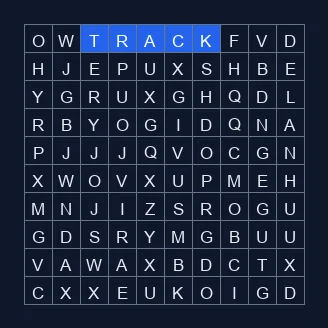
A horizontal highlight shows the goal of a row pass: follow the full line, mark or note a found word, then advance to the next row. The filler letters stay visible so you see how straight paths hide inside the grid.
Advantages of Horizontal Scanning
- Easier to keep attention on one continuous line
- Less chance of skipping cells inside a row you meant to finish
- Fast picks for words placed along the reading direction most grids assume
Horizontal scanning is often the first habit players develop—and it stays useful even when puzzles allow vertical and diagonal paths.
Understanding Vertical Search Strategy
Vertical searching moves column by column, tracing top to bottom or bottom to top before you shift sideways.
How It Works
- You lock onto one column at a time
- Your eyes travel in a structured vertical path
- Matches read as stacked letters rather than a sentence line
Vertical passes take a short adjustment if you usually read only across rows, but they are essential when lists hide tall or short upright words.
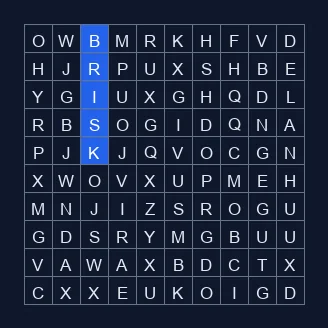
A vertical highlight mirrors column work: complete one stack of cells, then move to the neighbor column. That discipline catches upright words a row-only habit often walks past.
Advantages of Vertical Scanning
- Surfaces words aligned up and down the grid
- Breaks reliance on left-to-right reading alone
- Improves full-grid coverage when paired with finished row passes
Column sweeps help ensure no strip of the board stays unchecked after you have cleared the rows.
Key Differences Between Horizontal and Vertical Strategies
Both methods hunt straight-line words from the list; the difference is which axis you commit to first and how your eyes move.
Comparison Points
- Horizontal work fits natural reading flow and wide word shapes
- Vertical work structures attention down narrow stacks
- Rows often feel faster at first; columns close gaps rows leave behind
Relying on only one axis is a common reason words stay hidden on busier word search grids.
Combining Horizontal and Vertical Approaches
The most reliable routine on harder boards alternates row and column coverage instead of hopping at random.
Balanced Technique
- Run horizontal passes to grab obvious horizontal placements
- Switch to vertical passes on the same sections to catch upright words
- Repeat zone by zone so each area gets both orientations
Alternation raises accuracy and shortens end-game hunts for the last few list entries.
When to Use Each Strategy
Context on the list and grid can nudge you toward one pass first.
Horizontal Works Best When
- The list includes many long words that sit naturally across rows
- You want a quick first sweep after reading the list
- You are anchoring on prefixes or letter pairs that read left to right
Vertical Works Best When
- Horizontal sweeps left several list words still unchecked
- The grid is dense and upright overlaps are likely
- You are double-checking a quadrant before moving on
Knowing when to switch keeps performance steady across different word search puzzle games without abandoning structure.
Improving Your Scanning Flexibility
Treat both directions as trainable skills, not an either-or choice.
Practice Tips
- Alternate row-first and column-first openings on practice puzzles
- Avoid defaulting to rows only because they feel easier
- Aim for smooth eye motion in both axes—no jerky jumps between unfinished lines
Over time, flipping between horizontal and vertical passes feels automatic, and solves stay calmer on larger grids.
Frequently Asked Questions
Should I scan rows or columns first?
Either order works if you complete the pass you start. Many solvers open with rows for speed, then add columns before they call a section done. Pick one default and pair it with the other axis on every zone.
Can horizontal scanning find vertical words?
Not reliably by itself. You might spot a vertical word by accident while reading across, but column passes are what systematically surface upright placements. Combine both for full coverage.
Why do I miss words when I only scan horizontally?
Hidden words often share letters with row filler in ways that do not form a readable line across the row. A vertical sweep through the same cells reveals stacks your reading habit skipped.
Do diagonals replace vertical scanning?
No. Diagonal paths need their own check when rules allow them. Rows and columns still matter because most lists include horizontal and vertical placements even when diagonals are on.
How do I practice both directions without slowing down?
Use small grid sections: finish rows and columns in one quadrant before you jump elsewhere. Short, complete dual passes build muscle memory faster than whole-board hops.
Final Thoughts
Horizontal and vertical search strategies are complementary tools in word search and word find play. Rows leverage reading flow; columns close structural gaps. The best results come from alternating both, finishing each line you start, and switching orientation when a zone still holds unchecked list words. With repetition, that two-axis habit becomes quiet background skill—and puzzles finish with fewer late surprises.