





How to Find Words Faster in Word Search Games
Speed in word search and word find puzzles is less about frantic hunting and more about cutting wasted eye travel. Relaxing grids can still reward a steady scan path, shape recognition, and list habits that match how answers hide on straight lines—not crossword fill-ins, but find-and-mark paths from a word list.
Use a Consistent Scanning Pattern
Random hops replay the same empty zones and slow every solve. A repeatable pass finishes areas once.
Approaches that scale
- Row sweeps: top to bottom, line by line
- Column sweeps when horizontal passes stall or the list favors vertical shapes
- Short zigzag bands inside a quarter of the grid instead of jumping the whole board
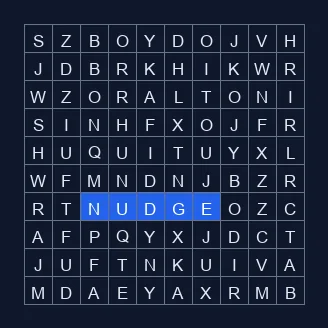
One finished band—a straight highlighted path across a row—shows what a consistent scan is chasing: coherent coverage instead of scattered peeks. Complete the current band before you open a new one.
Structured coverage keeps corners from staying blind until a rushed final pass.
Train Your Eyes to Recognize Word Shapes
Expert solvers often register a spelling’s silhouette before they read every cell.
What to practice
- Familiar letter pairs and endings on the list
- Word length at a glance along a candidate line
- Distinctive openings when a theme list repeats the same prefix
Shape reading trims the time spent decoding filler letter by letter.
Start with Longer Words First
Long entries span more cells, so they stand out against noise and simplify what is left.
Quick list pass
- Skim the vocabulary before the first grid fix
- Mark the longest or most distinctive spellings
- Hunt those entries early to thin a dense board
After a long word lands, shorter neighbors often sit on shared cells and read faster.
Look for Rare Letters Immediately
Q, Z, and X appear rarely in random filler. Spotting one narrows where a list word can live.
How anchors help
- Scan for uncommon letters during every band, not only when you are stuck
- Cross-check the list for entries that require those letters
- Trace straight paths from an anchor before you restart a blind sweep
Rare-letter hooks pay off on large grids where endless similar consonants blur together.
Focus on First and Last Letters
Endpoints compress the search space when a full read would take too long.
Example habit
- For a word like CIRCLE, hunt opening C and closing E on the same allowed line
- Match both ends, then confirm the middle in one pass
- Use last letters as reverse anchors when rules permit backward paths
Boundary letters reject false starts in a few cells instead of rereading entire rows.
Reduce Eye Movement Across the Grid
Long jumps between distant zones break rhythm and invite double scanning.
Sectioning tips
- Keep attention inside a small block until its passes are done
- Name progress mentally—“top left clear”—before you shift
- Avoid celebrating one find by abandoning the band you were finishing
Tight sections preserve momentum better than heroic leaps across the board.
Use Peripheral Vision Effectively
You do not need a fixation on every cell to notice a promising band.
Where periphery helps
- Long words register as streaks while you follow a scan line
- Clusters of matching letters suggest a return target after you mark a find
- Unusual shapes flag diagonals or reverses worth a deliberate second look
Peripheral cues point your next focused pass; they replace slow cell-by-cell staring.
Eliminate Found Areas Quickly
Each marked word should shrink the visual field you still owe attention.
After a find
- Mark or strikethrough immediately on the list and grid
- Treat solved zones as “done” during later passes
- Resist rechecking proved paths unless a final audit pass calls for it
A cleaner board keeps effort on unsolved list items.
Practice Reverse Word Recognition
Many puzzles allow backward reads along the same straight lines. Hesitation on reverses costs minutes.
Drills
- Read short list entries right to left until it feels normal
- Watch for mirrored pairs when your forward pass fails
- Run the same direction checklist on every band, including reverse
Reverse fluency stops you from clearing a row twice because the first pass ignored one allowed orientation.
Avoid Overthinking Each Word
A stubborn entry can freeze coverage while the rest of the grid waits.
Better rhythm
- Set a short honest try, then park the word and continue the sweep
- Return after other finds remove visual noise
- Keep list and grid in steady alternation—mark, scan, mark
Rotation protects overall speed more than staring at one blank line.
Build Familiarity Through Repetition
Fast pattern work becomes automatic after enough puzzles with the same method.
- Common word shapes need less conscious decoding
- Scan paths shorten as row, column, and diagonal passes feel natural
- Hesitation drops when anchors and sectioning are habitual
Regular word find play turns technique into reflex without skipping a calm final check.
Speed Comes from Strategy, Not Rush
Finding words faster means less wasted motion and clearer visual organization—not racing the clock while skipping directions or list items.
With consistent scanning, anchors, sectioning, and marked progress, you can raise pace in word search puzzle games while keeping solves accurate and enjoyable.
Frequently Asked Questions
What is the fastest way to scan a word search grid?
Use a repeatable order—often rows, then columns, then diagonals and reverses as rules allow—and finish each band before you jump. The best pattern is the one you can run every puzzle without wondering whether an area was already cleared.
Should I find long words or short words first to go faster?
Long words usually go first because they cross more cells and stand out. Short entries fit well in a closing sweep after anchors and long finds have quieted the board.
Do rare letters really speed up word find puzzles?
On dense boards, yes. Letters like Q, Z, and X appear rarely in filler, so spotting one quickly limits where matching list words can sit on straight paths.
Does rushing improve word search speed?
Rushing without coverage replays easy zones and skips whole directions. Speed up only after your scan pattern reliably hits every section.
Are word search puzzles the same as crosswords?
No. Crosswords fill blanks from clues. Word search puzzle games hide whole words on straight paths in a letter grid for you to find and mark—no clue-driven fill-ins.