





How to Improve Your Word Search Game Skills
Getting better at word search and word find puzzles is not only about raw speed. Steady scanning habits, sharper pattern sense, and calm pacing turn a casual grid into something you can solve reliably—straight-line paths from a word list, not crossword-style fill-ins.
This guide covers practical ways to build those skills and solve more grids with less wasted effort.
Develop a Systematic Scanning Method
The biggest leap most players make is moving from random peeks to a scan path they can repeat every puzzle.
Effective approaches
- Row passes: top to bottom without skipping wide bands
- Column passes when horizontal sweeps stall or list words favor vertical shapes
- One direction per pass so you are not reversing mid-line and rechecking the same cells
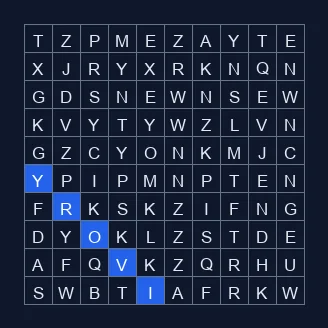
A single highlighted path along a diagonal shows what disciplined coverage looks for: one finished direction through the letters before you open another angle. That habit cuts double scans and blind spots in the corners.
A structured route spends time once per zone instead of hopping and hoping.
Start With Easier Words First
Not every list entry costs the same attention. Clearing quick wins early thins noise on the board.
Why this works
- Short or distinctive spellings stand out against filler
- Early finds build momentum and confidence
- Each marked word removes cells your eyes might re-read later
Tackle approachable entries first so harder paths sit on a calmer grid.
Train Your Eye to Recognize Patterns
Pattern work is what separates slow letter-by-letter reading from fluent word search solving.
What to look for
- Common pairs and endings from the list—TH, ING, and theme-specific openings
- Repeated letter clusters that suggest a straight path
- Overall word length and silhouette before you decode every cell
With repetition, whole shapes register while your scan line still moves.
Use First and Last Letters as Anchors
Endpoints narrow the grid when a full read would take too long.
Strategy
- Hunt the opening letter, then the closing letter on the same allowed line
- Connect the gap in one pass when both ends line up
- Use last letters as reverse anchors when backward paths are permitted
Boundary letters reject false starts in a few cells instead of rereading entire rows.
Improve Direction Awareness
Words hide on horizontal, vertical, and diagonal lines—often forward or backward along the same path.
Common directions
- Horizontal left-to-right and right-to-left
- Vertical top-to-bottom and bottom-to-top
- Diagonals in both slants when rules allow them
Run the same direction checklist on every band so one orientation does not stay invisible until the end.
Practice Peripheral Vision Scanning
You do not need a fixation on every cell to notice a promising streak.
How it helps
- Long list words read as bands while your main scan line advances
- Unusual clusters flag a second look without stopping the sweep
- Shape cues point the next focused pass instead of slow cell-by-cell staring
Peripheral glances support the main pattern; they do not replace a finished pass.
Avoid Over-Focusing on One Area
Camping on one stubborn word freezes coverage while the rest of the grid waits.
Better strategy
- Give an honest short try, then park the entry and continue the sweep
- Return after other finds remove visual clutter
- Keep the list and grid in steady alternation—mark, scan, mark
Rotation protects overall progress more than staring at a single blank line.
Use Word Length Strategically
Length is a free hint from the word list.
Practical tips
- Long entries span more cells and often pop against noise—good early anchors
- Short words need tighter passes; save them for a closing sweep
- Use a landed long word to suggest neighbors on shared cells
Let length guide order without ignoring short entries entirely.
Mark Progress Mentally or Visually
Knowing what is already solved keeps effort on what remains.
Benefits
- Strikethrough on the list stops duplicate hunts
- Marked grid paths read as “done” during later passes
- A shorter mental to-do list lowers fatigue on big boards
Clear tracking is especially valuable on dense or timed word search puzzle games.
Build Consistency Through Practice
Skill compounds when the same method meets regular grids.
What improves over time
- Scan speed without skipping sections
- Faster shape and anchor recognition
- Longer focus before attention drifts
Even a few puzzles a week, with the same scan order, reinforces habits faster than occasional marathon sessions.
Stay Relaxed and Avoid Rushing
Pace and accuracy move together when coverage stays complete.
Balanced approach
- Stay calm; let recognition arrive instead of forcing clicks
- Speed up only after your pass order reliably hits every zone
- Treat missed directions as a signal to slow the next band, not to panic
A relaxed rhythm often beats a frantic clock on both accuracy and finish time.
Final Thoughts
Improving word search game skills is gradual work built on observation, structure, and repetition. Orderly scans, pattern training, anchors, direction checks, and honest pacing add up. Over time, word find grids feel less like effort and more like familiar visual flow—with room to stretch into harder sizes, themes, or timed modes when you want a challenge.
Frequently Asked Questions
How long does it take to get noticeably better at word search?
Many players feel a difference within a few focused sessions if they keep one scan order and mark finds consistently. Deeper speed and pattern fluency usually grow over weeks of regular play, not from a single long binge.
Should beginners worry about all eight directions at once?
Learn the rules for your puzzle first, then add one direction family per pass—rows, then columns, then diagonals and reverses as allowed. Stacking every orientation into one chaotic peek usually slows improvement.
Is it better to practice on easy or hard grids while learning skills?
Easy and medium grids help cement method without constant frustration. Harder boards are useful once your scan path is automatic; they stress-test anchors, periphery, and pacing—not brand-new habits.
Do word search skills help with other puzzle types?
Scanning, focus, and pattern habits transfer to other visual puzzles, but word search stays distinct from crosswords or logic grids. This play trains straight-line search in a letter field, not clue-driven blanks.
What is the one habit that improves skills fastest?
A repeatable full-grid pass you run every puzzle—same order, marks after each find—beats any single “trick.” Everything else in this guide stacks on that foundation.