





Intermediate Word Search Game Techniques
Past the basics, word search and word find puzzles reward method more than luck. Intermediate play means steady scan paths, quicker pattern reads, backward-word awareness, and pacing that keeps accuracy on straight-line letter grids—not crossword-style clue work.
This guide collects practical techniques that bridge casual solving and harder themed or timed boards.
Strengthen Systematic Scanning
Random peeks stop working once lists grow and filler thickens. A repeatable route covers every cell once and cuts the “I already looked there” traps.
Common approaches
- Row passes in one fixed direction, then switch
- Alternating horizontal bands, vertical strips, and diagonal sweeps when rules allow
- Dividing large grids into blocks you finish before opening the next
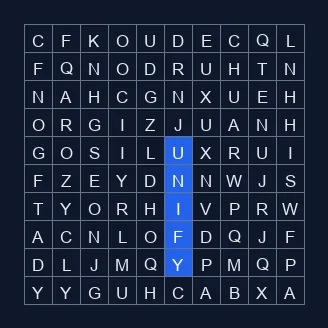
One word highlighted along a vertical path illustrates finishing a single direction through the grid before you pivot— the kind of order that keeps intermediate word search games from feeling like endless re-touches of the same rows.
Structured scanning spends attention once per zone instead of hopping and hoping.
Use Reverse Word Recognition
Many word search puzzle games hide backward spellings on the same straight paths. Intermediate players spot reversed shapes without rereading every cell forward.
Helpful strategies
- Read endings first when a backward path is allowed
- Trace a candidate path backward letter by letter before confirming
- Practice quick mental flips on short list entries so reverse lines feel familiar
Reverse awareness matters most on dense grids where reverse placement is common.
Improve Peripheral Vision Awareness
Fixating on one tight cluster slows full-grid coverage. A slightly wider visual field lets promising letter bands register while your main scan line moves.
How it helps
- Long or distinctive list words can flash at the edge of attention during a row pass
- Unusual double letters or rare consonants flag a second look without stopping the sweep
- Large grids get finished in fewer passes when you are not micro-staring at single cells
Peripheral cues support the main pattern; they do not replace a complete pass in each direction.
Identify Letter Patterns Quickly
Searching the whole word at once is slower than hunting fragments that list entries share.
Examples of useful patterns
- Common prefixes such as UN-, RE-, or PRE-
- Frequent suffixes like -ING, -TION, or -ED
- Double letters and odd consonant pairs that stand out in filler
Pattern hits narrow a row or column to a short span worth a focused read.
Prioritize Difficult Words Early
Not every list word costs the same effort. Long, rare, or awkward spellings are easier to spot before the grid feels crowded with marked paths.
Why this matters
- Tough entries have more open space early in the solve
- Simple three- or four-letter words still turn up on a late cleanup pass
- Front-loading hard words prevents a timer or fatigue from leaving one stubborn gap
Timed word search games especially reward attacking challenging list items while coverage is still fresh.
Balance Speed and Accuracy
Intermediate level is where fast habits and careful checks meet. Either extreme—creeping or reckless clicking—costs more time than a steady rhythm.
Key techniques
- Complete one directional pass before chasing a hunch in another orientation
- Pause a beat on likely matches; false highlights waste more time than a short verify
- Speed up only when your scan order reliably hits every section
Consistency beats burst speed for reliable finishes.
Practice Grid Memory
Remembering which bands you already cleared stops duplicate work on big boards.
Benefits
- Mental or light visual marks on “done” rows and columns
- Fewer round trips to corners you finished two passes ago
- Clearer sense of what remains on the word list
Light grid memory pairs well with list strikethroughs so effort stays on unsolved entries.
Transitioning to Advanced Play
These intermediate habits—ordered scans, reverse reads, pattern chunks, tough-words-first ordering, paced accuracy, and simple progress tracking—prepare you for larger grids, themed vocabulary, and competitive timers.
With regular practice the moves feel automatic, and word search puzzle games shift from hunt-and-peck to steady visual flow.
Frequently Asked Questions
What separates intermediate from beginner word search technique?
Beginners often search randomly; intermediate players run a repeatable full-grid path, use anchors and fragments, and check backward paths on purpose. The puzzle type is the same; the coverage discipline changes.
Should I learn backward words before diagonals?
Learn whatever your puzzle rules allow, in the order you play most. Many players master row and column passes first, then add diagonal and reverse checks as separate passes—not all mixed into one chaotic sweep.
Is peripheral vision enough to skip detailed scanning?
No. Wide glimpses spot candidates; you still owe each allowed direction a finished pass. Periphery speeds hints; structure finds the last few words.
When should I tackle the hardest words on the list?
Early, while untouched letters still dominate the grid. Save very short words for a closing sweep if they are easy to miss in noise.
Do these techniques apply to printable and online word find puzzles?
Yes. Straight-line list puzzles share the same skills whether you solve on paper or screen. Adjust for glare and zoom on devices, but scan order and pattern habits transfer directly.