





Is Word Search a Skill or Luck?
Word search and word find puzzles look simple: read a list, trace straight paths through a letter grid, and mark each hit. That simplicity makes it fair to ask whether strong finishes come from skill or from lucky glances. Chance can nudge when the next word pops into view, but consistent results in word search puzzle games depend far more on trained habits than on random searching.
This guide separates what you can practice from what barely matters—and why beginners often mistake messy scanning for good fortune.
The Role of Skill in Word Search Games
Skill is the main driver when you complete a word search reliably. It blends visual scanning, pattern recognition, and a repeatable search plan—not crossword-style definitions or fill-in blanks.
Key skills include:
- Systematic coverage of rows, columns, and diagonals
- Spotting familiar letter runs and word shapes quickly
- Holding focus across the whole grid instead of one hot zone
- Remembering which areas you have already cleared
Players who build those habits perform better as grids grow denser and word lists get longer.
Why It Might Feel Like Luck
Early on, word search games can feel random. Inexperienced solvers often:
- Move their eyes without a fixed scan pattern
- Miss words in less obvious straight-line directions
- Overlook shapes because the grid still feels unfamiliar
In those moments a find can feel like luck. Usually it is incomplete coverage—the word was there while your eyes were elsewhere—not a lucky roll.
How Skill Reduces Randomness
As habits improve, “random” finds drop off. Skilled players shrink uncertainty by:
- Sweeping the grid in the same order every time
- Matching letter shapes to list words instead of reading every cell in isolation
- Avoiding second passes over ground already checked
That structure makes outcomes steadier and less tied to where your gaze lands first.
The Importance of Pattern Recognition
Pattern recognition is one of the clearest signs that word search is skill-based. Experienced solvers do not spell out every letter; they notice structures that repeat across puzzles.
- Common prefixes and suffixes register faster
- Word silhouettes stand out in busy filler
- Hidden paths surface sooner through visual familiarity
Those gains come from practice, not chance.
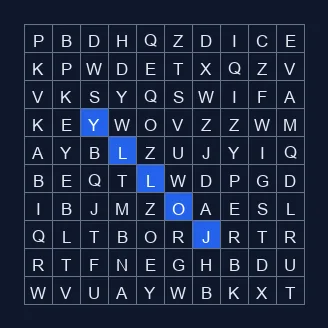
A diagonal highlight shows what trained eyes aim for: a straight path of letters matching a list word (“JOLLY” here)—the same kind of shape recognition that turns slow hunts into steady clears.
When Luck Still Plays a Small Role
Skill still dominates, but a thin slice of variance remains:
- A long word may sit exactly on your current scan line
- Some entries are visually louder than neighbors on the list
- Fatigue or distraction can shift where you look first
Those factors tweak timing more than they decide whether you can finish a fair puzzle.
Skill vs. Luck: The Real Balance
Word search puzzle games are best understood as skill-first challenges with only minor luck in the margins. Beginners may stumble onto words by accident; regular players outperform them through structured scanning, attention to detail, and pattern sense.
With practice, solving becomes less about surprise discoveries and more about a deliberate, repeatable method you can use on the next grid.