





Multiple Solutions in Word Search Puzzle Games
Most word search and word find puzzles are built so each entry on the list has one intended straight-line path in the grid. In practice, though, the same spelling can sometimes be traced along more than one valid row, column, or diagonal—especially on dense boards with heavy overlap and repeated letter clusters. That edge case does not turn the game into crossword fill-ins; it still rewards straight paths and a clear word list. This guide explains how alternate traces happen, what they mean for players and designers, and when they add replay value instead of confusion.
How Multiple Solutions Occur
Alternate paths usually appear when the letter field gives the same sequence more than one straight route.
Common setups:
- Crossing and overlap: Words share cells; filler and intersecting entries can recreate a short spelling along a different orientation or offset.
- Repeating letter patches: Clusters like repeated vowels or consonants make duplicate traces more likely for three- and four-letter entries.
- More than one workable start: The same direction and letter order can begin on different anchor cells when the grid echoes the spelling nearby.
Symmetry and theme-heavy layouts amplify the effect. The puzzle is still a list-and-line word search; you are not hunting arbitrary anagrams in every direction.
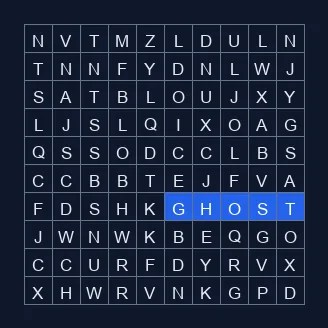
One highlighted horizontal path shows a single valid trace—“GHOST” embedded on a straight line. On busier grids, similar letter runs can invite a second straight path to the same list word; the job is to confirm every required spelling, not stop after the first hit.
Implications for Players
When alternate traces are possible, solvers benefit from treating the board as open until the full list is checked.
Helpful habits:
- Sweep the whole grid after you think you are done; a word you marked once might admit another straight path you skipped.
- Revisit stubborn entries on a second pass with different direction priorities.
- Use rare letters as anchors so you do not lock onto the first partial match.
Finishing every listed word once does not always reveal every legal straight trace the grid allows. Some players enjoy hunting optional duplicate paths; others care only about clearing the published list. Both approaches are fine as long as the puzzle’s rules say how many hits count.
Implications for Designers
Multiple traces can be accidental side effects of overlap—or a deliberate replay hook in custom or experimental puzzles.
Designers usually balance:
- Clarity: State how many words to find and whether duplicate traces count toward completion.
- Fairness: Alternate paths should feel like a bonus or a fair quirk, not a trick that hides the “real” word off-list.
- Testing: Walk the grid with the same direction rules players get; confirm each list entry is reachable and that extra traces do not break scoring.
Straight-line placement QA stays the same: each listed spelling should exist on-grid before filler scatters. Extra paths are seasoning, not a substitute for placing required words.
Enhancing Replayability
Optional alternate routes can nudge players back to a board they already cleared.
That works when:
- The puzzle invites a “find every path for this word” challenge outside the main checklist.
- Theme density makes rediscovery likely without making the primary solve ambiguous.
- Directions and list length stay readable so a second session feels like exploration, not homework.
Understanding when one word admits more than one straight trace helps both solvers and authors appreciate the overlap, letter noise, and layout choices that make word search puzzles engaging—sometimes with a small surprise after the list is complete.
Frequently Asked Questions
Can the same word appear on two straight paths in one puzzle?
Yes, on some dense grids. Standard editors still place each list word at least once; repeated letter patterns can occasionally yield a second valid straight trace for the same spelling.
Do multiple paths mean the puzzle has more than one answer key?
Usually no. Commercial list puzzles aim for one completion path per entry. Extra traces are often optional or accidental, unless the rules explicitly reward finding all of them.
Should I keep searching after I find every list word?
If you care about optional duplicates or a “find all paths” variant, yes. For a normal checklist solve, marking every list word on allowed straight lines is enough.
How do designers avoid confusing “multiple solutions”?
They keep the word count explicit, test placement under published direction rules, and separate intentional replay hooks from mistakes that leave a list word off-grid.