





How to Stay Patient in Difficult Word Search Games
A tough word search or word find can look calm on the surface—and still wear you down. Grids grow dense, orientations multiply, and one stubborn list entry can make the whole puzzle feel endless. Patience is not passive waiting; it is the habit of steady scanning, small goals, and calm resets when frustration spikes. That mindset helps you finish straight-line list puzzles on letter grids without turning the session into a race (this is word search, not crossword clue work).
Understanding the Challenge
Difficult word search puzzle games usually stack several pressure points at once:
- Long or unusual list words that share letters with heavy filler
- Extra orientations, such as diagonals or backward spellings when the rules allow them
- Dense boards where every band of cells needs a careful read
Naming those factors early sets realistic pacing. When you expect the grid to resist you, a slow find feels normal instead of like personal failure.
Start with a Systematic Approach
Patience lasts longer when the eyes know what comes next. Random hops feel faster for a minute, then leave whole stripes unread and invite second-guessing.
- Scan in sections—finish one row, column, or block before you jump elsewhere
- Reuse the same pass order each session so coverage becomes automatic
- Mark found words clearly so you are not re-solving ground you already cleared
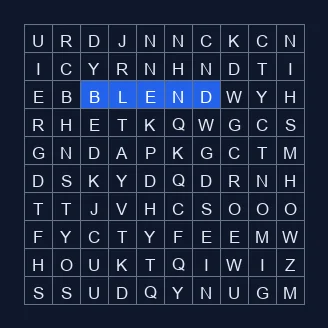
A horizontal pass is a patience-friendly default: you can see progress band by band instead of chasing flashes of luck across the board.
Methodical sweeps reduce wasted motion and keep attention on the list, which lowers stress on hard word search games.
Break Large Tasks into Small Goals
Treating a twenty-word list as one monolithic task invites overwhelm. Chunking turns patience into something you can practice on purpose.
- Clear a short subset of the list—every third word, or everything in one corner zone—before you widen the search
- Take a brief pause after each mini block so your eyes reset
- Note small wins; momentum matters more than heroic single sprints
Even sprawling word search puzzle grids feel workable when each segment has a clear finish line.
Manage Frustration
Every solver hits a wall: the same missing entry, the same band you already skimmed twice. Frustration pushes rushed scans that skip the very letters you need.
- Pause for a breath and return with a narrower target—one orientation or one quadrant only
- Shift zones instead of grinding the same tired cells
- Step away briefly when tension shows up in your shoulders or your pace
Managing frustration protects accuracy. Careless speed on a word find grid usually costs more time than a thirty-second reset.
Use Pattern Recognition
Patience is easier when skill replaces guessing. Pattern work gives the mind something concrete to hunt besides raw frustration.
- Watch for familiar prefixes, suffixes, and repeating letter pairs from the list
- Let word shapes guide you before you stare at every single cell
- Use anchor finds—long words you already marked—to narrow where neighbors might sit along straight paths
Fewer blind sweeps mean fewer dead ends, which keeps confidence—and calm—intact during difficult word search games.
Practice Regularly
Endurance builds like any other puzzle skill. Regular play on word search puzzle games trains both scan rhythm and emotional steadiness.
- Start with easier grids and add density or time limits only after your default pace feels reliable
- Notice which list types still spike frustration, then drill those in shorter sessions
- Keep a personal rule for resets—when to pause, when to recheck orientations—so hard boards feel familiar, not chaotic
What once felt impossible becomes a known workout, and patience becomes part of how you play instead of a mood you hope to catch.
Frequently Asked Questions
Why do I lose patience right before the last few words?
The finish line tricks the brain into speeding up. Those final entries are often short, backward, or tucked in bands you marked “done” too early. Slowing the last pass—especially for short words and non-forward directions—usually finishes faster than frantic rescans.
Is it better to take a break or push through when I am stuck?
A short break almost always wins on dense grids. Eyes that keep recycling the same cells rarely spot new paths; a two-minute reset or a switch to another zone breaks the loop without abandoning the puzzle.
Does row-by-row scanning help patience or just feel boring?
Steady row or column coverage is deliberately repetitive. That repetition is the point: boring passes catch words chaos misses, and visible progress row by row reinforces that you are moving, even when one answer hides.
Can timed word search games still teach patience?
Yes, if you treat the clock as a training tool, not a verdict. Timed modes reward calm efficiency—complete bands, clear marks, one orientation at a time—more than wild hopping. Untimed puzzles remain the best place to learn that rhythm first.
Are word search puzzles the same as crosswords?
No. Crosswords fill blanks from clues. Word search and word find games hide complete list words along straight paths in a letter grid for you to trace and mark.
Patience on difficult word search games comes from expectation, method, and honest resets—not from forcing yourself to stare harder. When you work in sections, celebrate small goals, and return calm after frustration, even dense grids stay playable from first word to last.