





Why Rushing Makes Word Search Games Harder
A word search or word find looks relaxed until you chase the clock—or the last few list words. Moving too fast through a straight-line list puzzle feels productive, but speed without coverage usually costs more time than it saves. Skipped bands, half-read letter runs, and orientations you never truly checked are why rushed sessions end with longer lists and sharper frustration. Understanding what breaks under pressure helps you finish letter grids with fewer rescans (this is word search path marking, not crossword clue work).
Mistakes Increase Under Time Pressure
When you rush a word search puzzle game, small lapses compound fast:
- Letters get skipped along the path your eyes think they already cleared
- Strings get misread because you lock onto a partial match instead of the full spelling
- Previously found words fade from memory, so you search the same ground twice or mark a zone “done” too early
Even one rushed band can mean repeated errors—and a longer total solve time once you stop to hunt what you skimmed past.
Visual Scanning Becomes Less Effective
Word search puzzle games depend on steady visual scanning, not frantic hopping. Rushing undercuts the habits that actually locate list words:
- Pattern spotting in noisy filler
- Catching diagonals, backward spellings, and overlapping paths when the rules allow them
- Comparing letters consistently across rows and columns
A hurried pace shrinks your effective field of view, so whole orientations never get a fair pass.
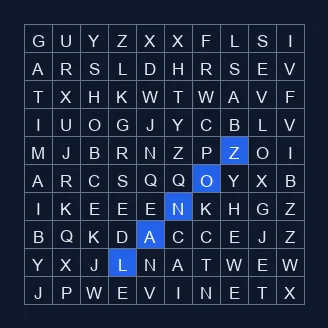
Diagonal paths are a common casualty of speed: when every sweep feels “forward only,” slanted list words stay invisible until you slow down and trace that line on purpose.
Frustration Can Escalate Quickly
Errors breed frustration, and frustration breeds more speed—a loop that is familiar on dense word search games:
- Missed words feel more frequent than they are because coverage was uneven, not because the grid is unfair
- You may skip sections convinced they are finished when only a quick skim happened
- Rising tension narrows attention again, which accelerates the next mistake
Slowing down restores mental clarity and patience—both required on hard word search puzzle grids.
Strategic Thinking Is Compromised
Finding words is not only about seeing letters. You also choose order, zones, and when to recheck. Rushing squeezes out:
- A planned search order instead of random jumps
- Splitting the board into manageable sections with clear finish lines
- Using pattern clues—prefixes, rare letters, familiar shapes—to aim the next pass
A deliberate pace leaves room for those tactics, which raises the odds you mark every list entry correctly on the first serious pass.
Benefits of a Calm Approach
Accuracy-first pacing on a word find grid pays off in ways that feel slower but finish sooner:
- Fewer mistakes: fewer invisible words left for an angry second round
- Sharper focus: eyes can follow each path long enough to verify the spelling
- Better satisfaction: a clean complete list beats a rushed almost-there
Treat calm scanning as the default; speed can grow on top once coverage is reliable.
How to Slow Down Without Wasting Time
Practical resets beat white-knuckle sprinting on word search games:
- One band at a time—finish a row, column, or corner block before you relocate
- Oriented passes—when diagonals or reversals count, give each allowed direction its own sweep
- Micro-pauses—a breath between zones beats skimming the same cells three times blind
- Short recheck—before you call the puzzle done, revisit the area you rushed earliest
These steps add minutes upfront and often subtract more from the cleanup phase.
Frequently Asked Questions
Why does rushing make word search puzzles take longer?
Rushed scans leave holes—especially on diagonals, backward reads, and short words in “quiet” corners. You pay those misses back with slower rescue passes and second-guessing, so net time rises even though each individual sweep felt fast.
Is timed word search bad for learning?
Not necessarily. A timer can motivate focus, but sprinting without method trains the wrong habit. Use timed modes once you have a reliable scan order; on hard grids, permission to slow down usually improves both accuracy and clock time.
Should I find easy words first or hard words first when I feel rushed?
Either order works if you stay systematic. Many players mark obvious anchors first to shrink the board, then run a slow dedicated pass for short or backward entries—the types speedsters skip most often.
How do I break a frustration spiral mid-puzzle?
Pause, pick one small zone or one orientation only, and finish it carefully before you widen again. A thirty-second reset or a shift to an untouched quadrant breaks the error-speed loop without abandoning the word search.
Are word search puzzles the same as crosswords?
No. Word search puzzles ask you to locate and mark hidden words along straight paths in a letter grid from a list. Crosswords use intersecting clues and definitions. Rushing hurts both, but the scanning and orientation habits here apply to word find grids specifically.
Prioritize patience, careful observation, and systematic passes over raw speed. On word search puzzle games, that balance is what finishes puzzles efficiently—and with confidence you truly found every list word.