





How to Stay Focused While Playing Word Search Games
Staying locked in on a word search or word find sounds simple until notifications, tired eyes, and a crowded list pull you sideways. Concentration is what turns random letter glances into reliable straight-line finds on the grid—not crossword-style clue work, but steady path marking on a letter board. The habits below protect attention so each session stays accurate and easier to enjoy.
Create a Distraction-Free Environment
Focus starts before your first scan. A calm setup keeps peripheral noise from stealing working memory.
Helpful conditions
- Quiet surroundings or steady background sound that does not demand attention
- Few competing visuals around the screen—clean desktop, dim secondary monitors
- Comfortable seating, neutral lighting, and a screen distance that does not strain your eyes
When the room and device feel settled, word search puzzle games need less mental effort just to ignore the world around you.
Use a Structured Scanning Method
Random hops across the grid feel fast for a minute, then leave bands unchecked and attention fragmented.
Better approach
- Scan row by row or column by column and finish one pass before you switch
- Keep the same direction order for each section so coverage is predictable
- Avoid jumping to “bright” letter clusters without finishing the zone you opened
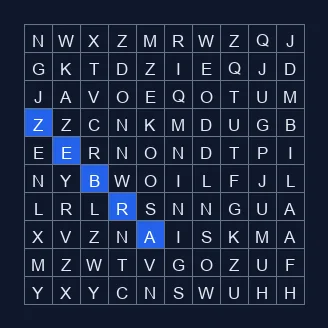
A fixed scan line—here along a diagonal example path—gives the eyes a job to finish. Structured passes beat scattered jumps when you want focus to last through a full word find list.
A deliberate method anchors attention on the list instead of on second-guessing where you already looked.
Focus on One Word at a Time
Trying to hold several list entries in mind splits concentration.
Why this works
- One active target cuts confusion about which spelling you are hunting
- Direction checks (forward, reverse, diagonal when allowed) stay tied to a single word
- Found words get marked clearly before the next search begins
Single-word focus is one of the easiest ways to sustain attention during word search games.
Break the Grid Into Sections
Large boards overwhelm working memory when you treat them as one undifferentiated field.
Section strategy
- Mentally divide the grid into blocks—quarters, row bands, or corner zones
- Complete one section’s primary pass before you widen the search
- Note which zones already had a full sweep so you are not re-solving them blindly
Chunking keeps word search puzzle grids mentally manageable without constant context switching.
Use Word Anchors for Better Focus
Anchors give the eyes a concrete starting point instead of drifting across filler letters.
How to apply it
- Pick the first letter of your target word and lock that cell briefly
- Use the last letter or a rare letter in the list as a second reference when paths run long
- Trace allowed straight paths between those points instead of rereading random runs
Anchor-led searches reduce idle scanning and keep engagement high on word search games.
Take Short Mental Breaks
Sustained intensity fades—even on puzzles that feel relaxing at first.
Benefits of breaks
- Brief pauses reset attention before visual fatigue sets in
- Looking away from the grid clears micro-fixations on the same empty band
- Returning with fresh eyes often spots a word that was visible the whole time
Even twenty seconds of rest can sharpen the next pass on word search puzzle games.
Avoid Over-Fixating on Difficult Words
One stubborn list entry can trap you in the same cells while the rest of the board goes cold.
Better strategy
- Park hard words temporarily and continue with entries you can verify quickly
- Rotate to another zone or orientation before you revisit the stubborn spelling
- Keep overall list progress moving so frustration does not become the main distraction
Skipping and returning preserves steady attention across the whole word search session.
Train Your Eye Movement
Smooth motion supports concentration; jittery jumps burn focus.
Practice tips
- Move the gaze in continuous lines along your chosen scan path
- Avoid bouncing back to areas you marked finished without a deliberate recheck plan
- Match eye speed to your pace—slow enough to read letters, steady enough to finish bands
Controlled eye movement makes focus feel automatic during word search puzzle games.
Limit External Interruptions
Small disruptions reset attention harder than solvers expect.
Common disruptions
- Phone or desktop notifications
- Side conversations or open chat windows
- Switching apps mid-puzzle to answer unrelated tasks
Silencing alerts and guarding a short play window helps you stay with word search games start to finish.
Build a Consistent Rhythm
A repeatable pace keeps the mind in the puzzle instead of fighting its own urgency.
Why rhythm matters
- Even tempo prevents rushed skims that skip letters
- Predictable timing supports continuous attention across long lists
- Calm rhythm can feel like flow—engaged without adrenal fatigue
Steady pacing makes word search puzzle games more immersive and less mentally noisy.
Frequently Asked Questions
Why do I lose focus halfway through a word search?
Fatigue, unfinished zones, and multitasking drain attention. Mid-game drops often mean your scan order broke down or you chased one hard word too long. Reset with one structured band pass or a short break, then return to a single list target.
Is music helpful or distracting during word find play?
It depends on you. Instrumental or low-volume background audio helps some players block noise; lyrics or podcasts that demand language processing usually compete with spelling checks. Choose audio that does not steal the same mental channel you use to read the grid.
Should I use a timer if I struggle to concentrate?
Timers can sharpen focus when you already have a reliable scan method. If speed makes your eyes jump randomly, turn the timer off and practice coverage first. Focus habits come before pace goals on word search puzzle games.
Do larger grids require different focus strategies?
Yes. Bigger boards reward sectioning and anchor words even more. Treat each block as its own mini puzzle, mark found words promptly, and avoid holding the entire grid in memory at once.
How is word search focus different from crossword concentration?
Crosswords lean on definitions and crossing entries. Word search focus is visual: systematic scanning, orientation checks, and list tracking on a letter grid. The environment and scanning habits in this guide target that path-finding style of play.
Final Thoughts
Strong focus on word search games comes from setup, method, and pacing—not force of will alone. Cut distractions, scan with a plan, work one list word at a time, and keep a calm rhythm. Those habits make straight-line word find grids easier to finish and more satisfying to play.