





How to Stay Organized While Solving Word Search Games
A word search or word find session gets messy fast when the list, the grid marks, and your eyes each follow a different plan. Organization is the glue: a clear workspace, a segmented list, steady scanning, and consistent marking so straight-line finds on the letter grid stack up instead of overlapping. That is path marking on a board—not crossword clue work—and the habits below keep mistakes and duplicate sweeps off your plate.
Start with a Clear Workspace
Order on the desk or screen supports order on the puzzle.
Setup that helps
- One puzzle visible at a time—close extra browser tabs or shuffle paper aside
- Lighting and screen distance that let you read every cell without squinting
- A single marking style chosen up front (highlighter, circle, or digital highlight)
When the environment is settled, you spend less energy hunting for the list or undoing accidental skips on word search puzzle games.
Break Down the Word List
Treating every list entry as equally urgent invites chaos. Chunk the list so progress is obvious.
List workflow
- Group by length or shape—short words first, or odd letters clustered together
- Check off finds immediately so unchecked lines stay honest
- Finish one chunk before you open the next; partial mixes blur what is left
A segmented word list mirrors how you will sweep the grid and lowers the chance you search for a word you already marked on word search games.
Use a Systematic Scanning Method
Unstructured hops leave bands unread and make organization impossible to verify.
Coverage habits
- Row-by-row or column-by-column passes until a zone is complete
- Diagonal checks when rules allow, using the same chunk boundaries as the list
- One orientation at a time so you know which cells belong to which pass
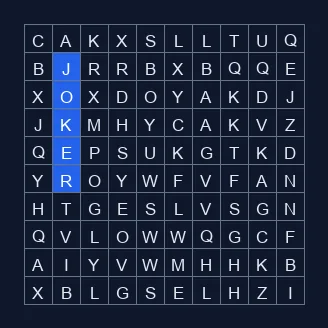
A finished line—here a vertical example path—shows where a sweep ends. When scanning is predictable, marks on the board and ticks on the list stay aligned through a full word find.
Structured scanning turns the grid into zones you can name, which makes rechecks faster on dense word search puzzle grids.
Mark Words Clearly
Mixed marking styles are how solvers lose track of what is found.
Marking rules
- Use one color or stroke for found words unless a second category truly needs contrast
- Mark the full spelling along the path before you cross the list entry
- Glance back at recent marks when you switch list chunks so styles stay consistent
Clear marks prevent double work and make the remaining list count trustworthy.
Revisit Unchecked Areas
Even organized play leaves corners and clusters easy to skip.
Targeted rechecks
- Edges and corners where words often sit just off your main sweeps
- Dense letter blocks that slowed an earlier pass
- Short or backward entries if your puzzle allows reverse directions along straight lines
Note which zones already had a full pass so revisits stay deliberate, not random rereads across the whole word search puzzle game.
Maintain Focus and Take Breaks
Fatigue dismantles list order and marking discipline faster than hard words do.
Pace that preserves structure
- Short breaks before your scan pattern dissolves into skim mode
- Steady tempo over hero sprints—rushing drops ticks and marks out of sync
- Return with one chunk in mind instead of reopening the whole board at once
Rest keeps organization intact so accuracy and enjoyment last through longer word search game sessions.
Frequently Asked Questions
Should I cross off the list or mark the grid first?
Pick an order and repeat it. Many solvers confirm the path on the grid, then cross the list entry so both views match. The win is consistency—list and board should never disagree for more than a second or two.
How do I organize when the word list is themed?
Group by sub-theme or letter pattern, not only by length. Theme clusters suggest which grid zones to search next and keep related finds batched so marking stays uniform across word search puzzle games.
Is it okay to skip a word and come back later?
Yes—parking stubborn words protects list order. Flag skipped entries, finish easier chunks, then return with fresh cells cleared. Organization means the skip is tracked, not forgotten.
What if I use both paper and digital word finds?
Match tools per session: one list copy, one mark style. Photograph or duplicate paper grids if needed, but avoid half the words on screen and half on scratch notes unless you tie them to the same chunk plan.
How does organization differ from staying focused?
Focus keeps attention on the task; organization keeps state visible—what is found, which zone is done, what marking means. You need both on straight-line word find grids, but this guide centers on list, mark, and zone discipline.
Final Thoughts
Staying organized while solving word search games is mostly visible progress: tidy setup, chunked lists, named scan zones, uniform marks, and honest rechecks. When those pieces line up, every word you find stays accounted for and the grid feels manageable start to finish.