





How to Build a Systematic Approach to Word Search Games
Random peeks across a word search or word find grid feel busy for a minute, then leave whole bands unchecked. A systematic approach turns that noise into a repeatable workflow: size up the board, order the list, sweep the letters in a fixed pattern, track what is done, and adjust after each puzzle. On straight-line list puzzles—not crossword-style clue work—that structure improves speed, accuracy, and how much you enjoy tougher grids.
Start with Grid Assessment
Before the first sweep, spend a few seconds on the grid and word list together.
Key Steps
- Scan for unusual letter clusters or repeating shapes that might host list entries
- Note word count, plus any long or odd spellings that deserve an early look
- Flag zones where paths may overlap, so you know where one find can unlock the next
That quick read sets priorities and keeps the opening pass from wandering.
Prioritize Words Strategically
Not every list entry costs the same effort. Order matters in word search puzzle games.
Effective Prioritization Techniques
- Lead with long or distinctive words when they anchor neighbors along a line
- Chase rare letters or unusual pairs that stand out in filler
- Save short or very common words for passes after the grid thins
Smart ordering cuts redundant re-reads and builds momentum for harder paths.
Use Consistent Scanning Patterns
A named sweep pattern is what makes coverage systematic instead of hopeful.
Recommended Patterns
- Row by row, then column by column, when you want full horizontal and vertical coverage
- Diagonal passes on harder boards where list words often run on a slant
- Rotate directions when overlap is dense—finish one orientation before you jump to another
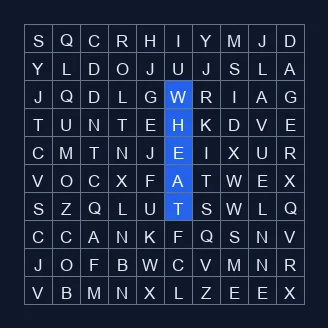
A single highlighted straight path on the board is a stand-in for one leg of a fixed scan—here, a full column read—before you move to the next band. Systematic play means finishing a pattern you can name, not scattering attention.
Consistency closes gaps and keeps progress easy to follow on dense word find grids.
Employ Marking and Tracking
What you have already cleared should be obvious on both the list and the board.
Methods to Track Progress
- Mentally zone the grid into quarters or blocks if the platform has no highlighter
- Mark found paths when the game allows, so you do not re-solve the same letters
- Note partial matches to revisit after another orientation pass
Clear tracking prevents double work and catches the last stragglers on busy puzzles.
Leverage Word Relationships
List words often share letters, themes, or crossing points.
How to Utilize Relationships
- Watch intersections where two entries might share a cell
- Use themed lists to guess which regions are worth another pass
- Let recent finds narrow where stubborn entries could still hide
Those links turn isolated hunts into a connected plan across the grid.
Refine with Time Management
Timed word search games reward the same habits with tighter pacing.
Time Management Tips
- Budget more effort on long or awkward spellings, not endless fixation on one entry
- Skip and return when a word stalls—another sweep after fresh finds often works
- Reserve the final minute for a fast missing-orientation check on unchecked bands
Balanced pacing keeps speed from trading away the coverage your system is built for.
Practice and Adjust
Your workflow should evolve as grids and lists change.
- Review sessions where time or misses clustered in one zone or direction
- Experiment with scan order on similar-sized puzzles and compare results
- Match method to difficulty—larger boards may need smaller section goals per pass
Small tweaks after honest review keep the approach sharp on any word search puzzle you open next.
Frequently Asked Questions
Do I always scan rows before columns?
Use a default order you can repeat, not a rigid rule. Many solvers favor rows first, then columns, then diagonals if the rules allow. Stick to one sequence long enough to finish a leg; switch only when that leg is done or clearly unproductive.
Should I find long words or short words first when building a system?
Short, distinctive words early often clear visual noise fast. Long words can expose shared letters along a line, so one early anchor helps on themed lists. A practical system blends both: a few quick wins, then anchors, then the rest—same order every session until the grid proves otherwise.
How does a systematic approach differ from just scanning harder?
Harder random scanning still revisits cells and skips orientations. A system names the steps—assess, prioritize, sweep, track, review—so you know which parts of the board are done. That is what reduces missed words on the last pass.
Will the same system work for timed and untimed puzzles?
Yes. Untimed play favors full coverage and patient rechecks. Timed rounds use the same sweep order but tighter skip-and-return rules and a final orientation pass for stragglers. The structure stays; only pacing changes.
A repeatable assessment, list order, scan pattern, and progress check turn scattered sweeps into a word search game method you can trust. Refine it after each puzzle, and challenging boards feel like a known workout instead of a scramble.