





What Makes a Good Word Search Puzzle Game?
A strong word search or word find puzzle is more than a crowded square of letters. The best boards feel clear to read, fair to solve, and satisfying to finish—whether you play for five minutes or an hour. Quality comes from how the grid looks, how words are chosen and placed, and how difficulty rises without turning the hunt into guesswork.
Clear and Readable Grid Design
Visual clarity is the foundation. If letters blur together or spacing feels cramped, players fight the layout instead of enjoying the search.
Solid grid design usually means:
- Clear separation between cells and consistent letter sizing
- A grid size that matches the word count and audience (beginner-friendly boards are rarely huge)
- Spacing and contrast that stay comfortable on screen or on paper
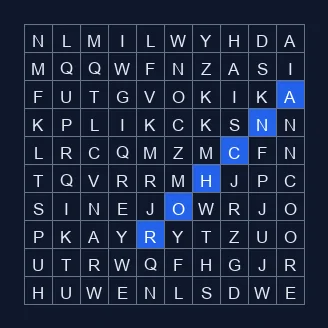
When spacing and contrast are right, you can scan rows and diagonals without squinting; the highlighted path shows how one list word sits on a single continuous line amid filler letters.
A readable grid lets attention go to vocabulary and scanning, not typography.
Balanced Difficulty Level
Good puzzles stretch you without draining motivation. All-short lists on a vast grid can feel empty; cramming obscure words into a tight board can feel punitive.
Healthy difficulty often includes:
- A mix of short anchor words and longer themed entries
- Words running in more than one direction when the rules allow (horizontal, vertical, diagonal, and reverse where stated)
- Gentle progression—larger grids, fuller direction sets, or denser overlap as you level up
That balance keeps beginners welcome while still giving experienced solvers a reason to slow down and look twice.
Thoughtful Word Selection
The word list sets the mood. Themed packs (animals, sports, holidays) give context; random grab-bags feel disconnected unless that variety is the point.
Well-chosen lists tend to:
- Stick to a clear theme or learning goal when one is advertised
- Avoid near-duplicates that eat slots without adding interest
- Blend familiar words with a few that teach or surprise
When the list feels intentional, the puzzle reads as a curated experience rather than a dump of entries.
Smooth and Logical Word Placement
Placement is where fairness lives. Each list word should already trace along an allowed straight path before filler letters land; overlap should clarify crossings, not hide words off-list.
Effective construction usually:
- Crosses words at shared letters without making short entries vanish in noise
- Keeps the full list solvable under the published direction rules—no silent extra paths required
- Spreads entries across the grid so one corner is not doing all the work
You should earn progress by scanning, not by wondering whether a word was ever placed.
Challenge, Density, and Fun
Mental effort and enjoyment can coexist. Density matters: a moderately full grid offers decoys and overlap; an almost empty board can feel like busywork.
Designers who nail the feel:
- Tune word count to grid area so “hard” means careful looking, not impossible cramming
- Skip unfair tricks—words clipped by borders, list spellings that do not match the grid, or rules the board ignores
- Reward steady clears with visible progress (marking found words, shrinking the list)
When density and placement stay honest, challenge feels like focus, not frustration.
Variety and Replay Value
Even strong single puzzles grow stale if every board looks the same. Variety keeps word search games fresh:
- Rotating themes and seasonal lists
- Different grid sizes and direction sets
- Optional timers or untimed modes for different moods
Replay value comes from novelty within a familiar format—new letter scenery, same satisfying straight-line hunt.
Putting It Together
A good word search puzzle game combines a readable grid, a coherent list, careful placement, and difficulty that respects your time. Those pieces turn random letters into a calm, repeatable puzzle that still wakes up your eyes and vocabulary.
Frequently Asked Questions
Does grid size alone make a word search “good”?
Size helps, but it must match the list and rules. A huge grid with a tiny list feels hollow; a small grid packed with long words needs overlap done carefully.
Are diagonal and backward words required for quality?
No. Many excellent puzzles use only horizontal and vertical entries. Full direction sets raise challenge when rules clearly allow them—not every board needs every angle.
How many words should a grid hold?
There is no magic number. Aim for enough entries to keep scanning interesting without so much overlap that short words disappear. Theme and audience matter more than a fixed count.
Can overlap ruin a good puzzle?
Overlap is normal and often elegant. It becomes a problem when crossings are so dense that list words are hard to trace or solvers suspect a word was never placed.
Is a themed word list better than a random one?
Themed lists add context and learning; mixed lists suit casual variety. “Good” means the list matches what the puzzle promises on the cover or menu.