





Why People Enjoy Word Search Puzzle Games
Word search and word find puzzles have stayed popular for decades across ages and cultures. The rules stay simple—scan a letter grid and mark whole words along straight paths—but players still describe the pastime as calming, satisfying, and lightly stimulating. The appeal is not one trick; it is a blend of low pressure, clear progress, and mental engagement you can tune to your mood.
Simple Rules, Easy Entry
A major draw is how little stands between you and the first word. Read the list, trace spellings in horizontal, vertical, or diagonal lines (depending on the puzzle’s settings), and check them off. No long tutorial, no equipment beyond a pencil or screen.
That simplicity supports:
- Immediate play—beginners and veterans start the same way
- No skill gate—vocabulary and patience matter more than gaming reflexes
- Your pace—pause mid-grid without “losing a run”
Because every fair board is built to be solvable, word search puzzle games feel welcoming instead of punitive from the first row.
A Relaxing Mental Activity
Many players treat word find grids as quiet focus time. There is no opponent shouting in your ear; even timed modes usually reward steady scanning over frantic tapping. The rhythm—sweep, spot, confirm—can feel almost meditative.
Relaxation often comes from:
- Repetitive scanning that occupies the mind without emotional drama
- A single clear goal—finish the list—without story branches or surprise losses
- Order on the page—letters stay put; only your highlights change
After a hectic day, a short word search game can work like a mental palate cleanser: something to do with your hands and eyes that does not demand a plot recap.
Sense of Achievement
Each found word is a small, visible win. Crossing off entries shrinks the list; clearing the last word closes the loop. That step-by-step feedback is part of why people return—even on easy grids.
Progress feels good because:
- The list tracks itself—you see exactly what remains
- Challenges stay bounded—one board, one finish line
- “Solved” is unambiguous—no partial credit ambiguity
Even a five-minute puzzle can leave you with a tidy before-and-after: a full grid with every target highlighted.
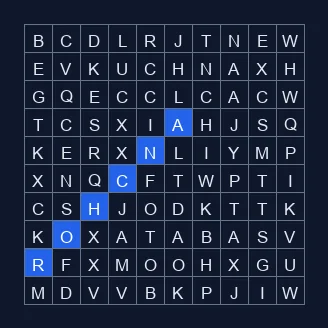
Each diagonal highlight is a miniature reward: one straight spelling (“ANCHOR” here), one line checked off the list, then on to the next hunt. That drip of completion is a core part of why word search feels satisfying without being stressful.
Cognitive Engagement
Word search puzzle games are not heavy brain training, and they are not crossword-style clue solving. They still ask you to scan, filter noise, and match letter patterns to words you know—skills that stay active while the tone stays casual.
Players often notice:
- Sharper attention to detail after repeated grids
- Quicker pattern reads when the same theme words show up often
- Light stimulation—enough to feel awake, rarely enough to exhaust
The balance suits anyone who wants a touch of mental exercise without performance anxiety.
Accessibility for All Ages
Children practice letters and spelling; adults use themed lists for nostalgia or focus; older solvers enjoy large print and familiar vocabulary. The format scales without rewriting the core idea.
Accessibility shows up in:
- Difficulty and grid size tuned to the audience
- Theme lists that match reading level or interests
- Short or long sessions—one word at a time still counts as play
That breadth helps word find puzzles stay relevant across generations and settings, from classroom warm-ups to waiting-room distractions.
Flexible Play Style
You do not owe a word search puzzle game a marathon session. Stash it on a phone for a two-minute break, print a page for a lazy Sunday, or work one list over several sittings. Most products save state so interruption is normal, not failure.
People like that freedom because:
- Snackable rounds fit commutes and coffee breaks
- Deep-focus blocks are optional when you want flow
- No mandatory clock on many classic formats
Digital and paper versions share the same straight-line mechanics; what changes is convenience, not the satisfaction of finishing.
Conclusion
People enjoy word search puzzle games because they pair simple entry with calm focus, steady micro-rewards, and flexible sessions. They stimulate pattern and attention in a low-stakes way, and they welcome almost any age or schedule. Whether you play for unwind time or a bit of light mental stretch, word find grids keep offering a finish line that feels both attainable and worth crossing.