





Why Word Search Puzzle Games Are So Popular
Word search and word find puzzles have stayed popular for decades while other pastimes come and go. On the surface the rules look minimal—read a word list, then trace spellings along straight paths in a letter grid—but that simplicity hides a durable mix of accessibility, light mental work, and flexible pacing.
Children use grids to practice letters; adults reach for them to unwind or focus. The audience stays wide because the format scales without reinventing itself every season.
Easy to Learn, Hard to Master
A top reason word search puzzle games spread so easily is how fast new players understand the goal: locate every listed word hidden among filler letters.
There is no equipment culture, no combo memorization, and no steep tutorial cliff. Someone can finish their first word within minutes. Getting faster and spotting words without second-guessing still takes repeated play, which gives experienced solvers something to improve.
That balance—open door, long runway—keeps both first-timers and veterans interested.
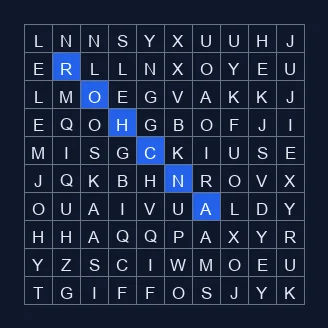
A single straight-line find (here, “ANCHOR”) shows the whole pitch: one list, one grid, one spelling locked in. Easy to grasp at a glance, still worth practicing until scans feel automatic.
Suitable for All Ages
Unlike genres built around reflexes or niche lore, word search puzzle games fit almost every age band.
- Children build vocabulary and letter recognition
- Teens and adults treat grids as casual mental breaks
- Older players often prefer the calm pace and readable layouts
Because difficulty scales through grid size, word count, and list themes, the same mechanics work in classrooms, waiting rooms, and quiet evenings at home.
A Relaxing Yet Engaging Experience
Many people choose word find puzzles when they want calm focus. There is usually no adversary, no sudden fail state, and no pressure to mash buttons.
You can scan row by row, follow a hunch diagonally, or stop mid-grid and return later. Meanwhile the brain still hunts patterns—matching list entries to letter runs, filtering noise, checking direction rules.
Relaxation and engagement stack together, which is why the same player might open a grid after work and again on a weekend morning.
Flexible Gameplay
Word search puzzle games slot into real schedules because each puzzle is a self-contained unit.
- Two-minute phone rounds between tasks
- Longer blocks when you want flow
- Casual solves with no streak or account at stake
- Repeat play to chase speed or cleaner scanning habits
Pause and resume are normal; nothing “breaks” when life interrupts.
Variety and Replay Value
Popularity also rides on how many shapes one format can take. Two boards are rarely identical.
Variety shows up in:
- Grid dimensions and density
- How many words hide in the fill
- Short versus long entries
- Allowed line directions (horizontal, vertical, diagonal, depending on settings)
- Themed word lists tied to hobbies, seasons, or school topics
Even veterans who have cleared hundreds of lists can still meet a fresh theme or a tighter grid.
Sense of Achievement
Every located word is a visible step. The list shrinks; the grid fills with highlights; the last entry closes the puzzle cleanly.
That drip of small wins matters. A hard board feels manageable when you treat it as a series of one-word tasks instead of one opaque wall. Motivation stays high without the stress of ranked ladders or surprise penalties.
Supports Learning and Skill Development
Word search puzzle games are not a language course, and they are not crossword-style clue solving. They still reinforce skills players already care about:
- Spelling patterns and familiar word shapes
- Vocabulary exposure, especially with themed lists
- Visual scanning across a wide field
- Sustained concentration on one clear job
Because those gains ride along inside play, practice feels optional rather than assigned.
Easy to Adapt to Digital Formats
Print booklets put word search on kitchen tables for generations. Screens added convenience without changing the core loop.
Digital word find games often add:
- Tap or drag highlighting
- Optional timers and scoring
- Difficulty presets and grid generators
- Saves that remember half-finished boards
The straight-line list-and-grid idea stays the same; delivery gets faster, portable, and easier to customize.
A Game That Fits Modern Lifestyles
Busy days still leave room for meaningful pauses. Word search puzzle games ask for minutes, not hours, and they travel on phones, tablets, or paper.
They offer enough structure to feel purposeful and enough softness to feel restorative. That combination matches how many people want to decompress without switching off their minds entirely.
A Simple Idea That Keeps Working
Lasting popularity is a signal: enjoyment does not require baroque rules. A clear target, fair hidden words, and steady progress often suffice.
New players keep discovering word search games for the same reasons longtime fans stay: low friction entry, honest satisfaction per word found, and a format that respects their time.