





Word Search Game vs Sudoku: Which Is More Challenging?
Word search and word find puzzles hand you a letter grid plus a word list: you trace straight paths to mark every listed word. Sudoku hands you a partly filled 9×9 number grid: you use logic so each row, column, and 3×3 box holds digits 1–9 with no repeats. Both feel calm on the couch, but “harder” means different things depending on whether you care about observation speed, rule learning, or sustained deduction.
Basic Nature of Each Puzzle
Start with what you are actually doing on the page.
Word Search Games
- A grid filled mostly with letters, plus a published list of hidden words
- Words placed on straight lines—horizontal, vertical, diagonal, and sometimes reversed along those lines
- Your job is to spot list words already embedded in the field, not to invent new values
Word search rewards visual scanning and pattern recognition more than multi-step arithmetic logic.
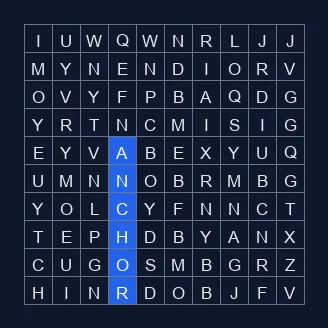
Word search looks like this: dense letters, one highlighted path such as “ANCHOR,” and a checklist of words to clear. You are hunting shapes in noise, not proving that only one digit can sit in a cell.
Sudoku
- A 9×9 grid with some cells prefilled and others empty
- Each row, column, and 3×3 box must contain 1–9 exactly once
- Progress comes from elimination and deduction—guessing is a last resort on fair puzzles
Sudoku is a constraint puzzle: every placement must respect several rules at once.
Types of Skills Required
Difficulty tracks which mental muscles you lean on hardest.
Skills Used in Word Search Games
- Sustained visual attention and systematic scanning
- Letter-pattern and direction awareness
- Quick eye movement across rows, columns, and diagonals
- Spotting familiar chunks and list words inside filler letters
Word find players optimize coverage—how thoroughly they sweep the grid without losing place.
Skills Used in Sudoku
- Logical reasoning and structured elimination
- Short-term memory for candidates in multiple cells
- Patience when one early mistake propagates
- Step-by-step inference instead of instant pattern hits
Sudoku players optimize consistency—keeping every constraint true after each fill.
Speed vs Depth of Thinking
The two formats encourage different rhythms.
Word Search Games
- Bursts of fast visual recognition when a list word “jumps out”
- Momentum from checking off easy finds, then hunting stragglers
- Many grids finish in one short sitting once scanning habits click
The main friction is missing a word in a direction you have not checked yet—not untangling a chain of deductions.
Sudoku
- Slower passes over rows, columns, and boxes
- Time spent comparing candidates and ruling digits out
- Hard puzzles may sit half-finished across multiple sessions
The main friction is reasoning depth—how many linked constraints you must hold before the next safe number appears.
Difficulty for Beginners
First impressions diverge sharply.
Word Search Puzzle Games Difficulty
- Rules fit in a single sentence: find every list word on straight paths
- If you can read the language, you can start on an easy themed grid
- Challenge rises with grid size, list length, direction set, and overlapping letters
Kids, classrooms, and casual adult players often feel productive within minutes.
Sudoku Difficulty
- You must learn row, column, and box rules before progress feels fair
- Early mistakes can confuse the whole board until you backtrack
- Difficulty climbs with fewer givens and advanced techniques on hard grades
Many newcomers need a few guided solves before sudoku feels comfortable rather than intimidating.
Cognitive Challenge Comparison
Both can support mental fitness; the load lands in different places.
Word Search Games Cognitive Load
- Heavy visual processing and attention switching
- Moderate strain—less symbolic juggling than number puzzles
- Strength comes from practice scanning, not memorizing a rulebook
Sudoku Cognitive Load
- Heavy symbolic reasoning and constraint tracking
- Higher sustained focus; errors punish more globally
- Strength comes from technique fluency as much as raw patience
If you want a puzzle that taxes logic first, sudoku usually wins. If you want one that taxes the eyes first, word search usually wins.
Time and Effort Required
Session length is another practical “difficulty” yardstick.
Word Search Games
- Often coffee-break length unless the board is huge
- Speed runs reward rhythm; untimed play stays low-pressure
- Mental fatigue tends to show up as missed letters, not broken logic chains
Sudoku
- Easy puzzles may still take longer than a small word find
- Hard sudoku can consume serious clock time without feeling “rushed”
- Fatigue often shows up as wrong digits that force rework
Which Is More Challenging?
There is no single winner—only a better fit for what you mean by challenge.
- If challenge means fast observation and list-clearing under a full grid, a dense word search can feel demanding even though the rules are simple.
- If challenge means deep logic, candidate memory, and long focus, sudoku is usually the steeper climb, especially on sparse expert grids.
At equal “casual” settings, sudoku is often called the more mentally demanding format because structured reasoning runs the whole solve. Word search stays more accessible and visually driven, though large grids with every direction enabled can still stump experienced scanners.
Final Thoughts
Word search and sudoku both offer worthwhile brain play, but they train different habits. Word find is list-and-line: sweep a letter field until straight paths spell every target. Sudoku is rules-and-elimination: place digits so no row, column, or box breaks. Pick word search when you want brisk visual hunts; pick sudoku when you want slower logical builds—or rotate both if you like variety without mixing up the two rule sets.