





Word Search Puzzle Games for Kids: Benefits and Tips
Word search and word find puzzles give children a straightforward job on a letter grid: find every word on the list along a straight path. Swap in a fresh theme—animals, colors, school units, everyday objects—and the same rules still apply. This is not crossword-style clue work; kids hunt spellings they already know or are learning, one letter at a time.
Setup stays light and pace stays flexible, so word search puzzle games fit home, classroom, or a five-minute break.
Why Word Search Puzzle Games Are Good for Kids
Word search is more than quiet entertainment. It supports early literacy and attention skills while the child still feels like they are playing a game.
1. Vocabulary Development
Themed lists expose children to words in a low-pressure way.
- New topic words appear in context with a clear spelling model
- Repeated sightings on the list and in the grid reinforce form
- Themed packs group related vocabulary (seasons, sports, science labels)
That pattern helps native-language growth and can supplement light second-language exposure when lists stay age-appropriate.
2. Spelling Practice
Searching letter by letter nudges kids to notice order, not just the first letter.
- Correct sequences stand out when a path almost matches
- Comparing similar shapes in the grid builds spelling confidence
- Short, familiar words on early boards keep success within reach
The effect complements formal spelling drills—it is practice through search, not drilling alone.
3. Concentration and Focus
Finding every entry takes sustained scanning.
- Row-by-row or column-by-column passes reduce random hopping
- Sticking with one puzzle trains patience when words hide well
- Finishing the list gives a clear sense of completion
Those habits carry over to reading and other calm, sit-down work.
4. Visual Pattern Recognition
Letter grids train the eye to treat a word as a shape.
- Straight paths may run horizontally, vertically, or diagonally, depending on puzzle rules
- Repeated letter pairs become easier to spot against filler
- Spatial layout on the board becomes familiar over time
That visual processing supports early reading and handwriting readiness.
Types of Word Search Games for Kids
Not every puzzle suits every age. Match grid size, word length, and optional timing to the child.
Simple Word Search Games
- Smaller boards with fewer words
- Short, high-frequency spellings
- Open layouts with little overlap
Best for first-time solvers and pre-K or early elementary readers with a little help.
Themed Word Search Puzzle Games
- Animals, holidays, classroom units
- Lists tied to books or field trips
- Vocabulary that matches what they are learning elsewhere
Themes add motivation without raising rule complexity.
Timed Word Search Games
- Optional clocks for older kids who want a race
- Faster list clears when confidence is already high
- Still straight-path search—not timed definition puzzles
Use timing only when it stays fun; skip it if it adds stress.
Tips for Helping Kids Enjoy Word Search Puzzle Games
Adults can coach technique without taking over the solve.
Start With Easy Puzzles
Small grids and words the child can read aloud build confidence before you increase size or list length.
Use Familiar Themes
Toys, food, pets, and playground words lower the barrier. The child spends energy on scanning, not decoding brand-new concepts on every line.
Encourage Step-by-Step Searching
Show one systematic pass—full row, then next row, or one column at a time—instead of darting across the grid.
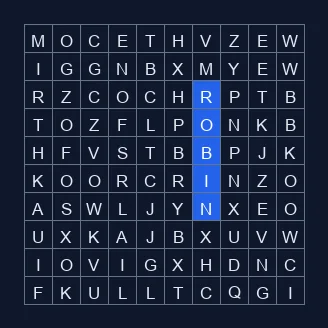
One highlighted word on a vertical line shows how ROBIN reads as a single trace—handy when you ask a child to finish one row or column before hopping elsewhere.
Celebrate Progress
Praise found words, steady scanning, or finishing the list—not only speed. Small wins keep word search feeling like play.
Educational Value Beyond Entertainment
Used intentionally, word search supports broader goals without replacing teacher-led instruction.
- Reinforces unit vocabulary from school
- Offers quiet independent work during transitions
- Builds confidence when children solve without hints
- Keeps reading-related skills active during breaks
Treat it as a supplement: helpful exposure and practice, not a full literacy program on its own.
Making Word Search Puzzle Games Part of Learning Routine
Short, regular sessions beat rare marathons.
- Five to ten minutes after homework or before bedtime
- Classroom warm-ups with lists tied to the week’s topic
- Travel or waiting-room activity with printed or on-screen grids
Rules are easy to explain, so mixed-age siblings can share a theme while adults pick different grid sizes. Keep challenge and fun in balance so the child looks forward to the next board.
Frequently Asked Questions
At what age can children start word search puzzles?
Many children enjoy assisted search once they recognize most letters; independent play often clicks when they read short words fluently. Start with tiny grids and grown-up help tracing the first word.
Are word search games educational or just fun?
Both. They are playful, but they still practice spelling exposure, visual scanning, and focus—especially when lists match what the child is learning.
Should kids use timed word search games?
Only if they ask for it or enjoy gentle races. Untimed boards are better when the goal is calm practice or rebuilding confidence.
How is word search different from crossword puzzles for kids?
Word search uses a word list and straight paths through the grid. Crosswords lean on definitions and filled intersecting answers. For young learners, list-and-find puzzles are usually simpler to start.
Can word search help with spelling tests?
It can reinforce how words look, not replace studying meanings or writing words from memory. Pair puzzles with the same weekly spelling list for extra visual practice.
What if a child gets frustrated and quits?
Shrink the grid, reduce the list, switch to a favorite theme, or solve one word together and let them finish the rest. The habit matters more than clearing a hard board in one sitting.