





Word Search Puzzle Games With vs Without Word Lists
Word search and word find puzzles always hide answers along straight paths in a letter grid—not crossword-style clue fill-ins. The biggest format split is whether you see a word list up front. With a list, every round is targeted: you know the targets, cross them off, and measure progress by the count left. Without a list, the same grid becomes an open hunt: you must spot valid hidden words using theme rules, vocabulary, or intuition. That one design choice reshapes difficulty, pacing, and the skills you practice.
Word Search Puzzle Games With Word Lists
Most classic word search puzzle games show a list beside or below the grid. It names every word you are meant to find before you start scanning.
How It Works
You read the list, pick a word, and sweep rows, columns, or diagonals until the letters line up on a straight path. When a word matches, you highlight or cross it off the list and move to the next entry.
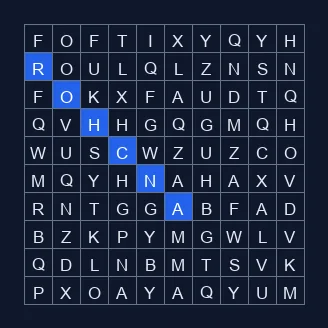
A published list tells you exactly what to trace—here “ANCHOR” along one straight path. List play is less about guessing what counts and more about steady scanning until each named word is found.
Advantages of Word Lists
A visible list keeps the round grounded:
- Clear objectives from the first glance
- Easier onboarding for beginners and casual play
- Less ambiguity about what “counts” as a find
- Room to practice repeatable scanning habits
Structured list play is usually the faster route to comfortable grid coverage.
Player Experience
With a list, solvers often:
- Work one target word at a time
- Use row-by-row or section-by-section sweeps
- Feel steady progress as the list shrinks
For many players, that rhythm feels calmer and more beginner-friendly.
Word Search Puzzle Games Without Word Lists
Some word find variants hide the targets. You get the grid (and sometimes a theme or rule) but no upfront inventory of words.
How It Works
Instead of hunting named list entries, you decide which letter chains form legitimate words—often tied to a topic, minimum length, or allowed directions. Discovery is part of the puzzle, not just execution.
Increased Difficulty
Dropping the list raises the bar quickly:
- You do not know the vocabulary set in advance
- Recognition happens while you scan, not before
- Active vocabulary and pattern sense matter more
The puzzle shifts from “find these twelve words” to “find what is hiding here at all.”
Player Experience
Players typically notice:
- Slower, stop-and-think moments between finds
- Higher mental effort per minute on the grid
- Less checklist satisfaction, more surprise when a word clicks
It feels less like ticking boxes and more like exploring the letter field.
Key Differences in Gameplay Approach
Whether a list is shown changes how you interact with the grid.
With Word Lists:
- The goal set is fixed before you start
- Search stays targeted toward known spellings
- Progress is easy to measure (found vs remaining)
Without Word Lists:
- The goal is partly hidden until you discover words
- Search stays exploratory across the grid
- Progress is uneven—you may stumble on long words late
Those contrasts drive different pacing even when grid size and direction rules stay the same.
Impact on Difficulty Level
Word lists act like built-in hints. Removing them does not change the letters, but it changes what you must remember and decide on the fly.
- With a list: lower uncertainty, more structured solving
- Without a list: higher uncertainty, more mental effort per find
A medium grid with a full list can feel approachable; the same density without a list often reads as advanced.
Strategy Differences Between Both Formats
Strategies diverge because the information you start with differs.
With Word Lists
- Anchor on distinctive letters or short words from the list first
- Scan for one spelling at a time instead of every possible chain
- Mark finds immediately so you do not repeat paths
Without Word Lists
- Sweep for any plausible straight-line words that fit the theme
- Lean on vocabulary, prefixes, and familiar word shapes
- Accept more backtracking when a chain does not resolve to a real word
Same grid mechanics, different mindset.
Cognitive Load and Player Effort
List play lowers what to look for but still asks for sustained visual scanning. No-list play adds what counts on top of scanning.
- With a list: lighter memory load, heavier orderly search
- Without a list: heavier recall and judgment, combined with search
Extra uncertainty increases cognitive load, which some players enjoy as a sharper challenge and others find draining on long sessions.
Learning and Skill Development
Both formats train overlap skills but emphasize different strengths.
- With a list: scanning speed, direction coverage, pattern spotting on demand
- Without a list: vocabulary activation, flexible discovery, comfort with ambiguity
Alternating the two helps build both disciplined list solving and exploratory word sense.
Why Both Formats Are Used
Designers keep both modes because they serve different audiences and moods.
- List versions support classrooms, themed packs, and relaxed casual play
- No-list versions suit advanced challenge, creative themes, or “surprise me” grids
Together they widen the word search category without changing the core straight-line rule.
Choosing the Right Style
Match the format to your goal for the session:
- Beginners or quick breaks: puzzles with a clear list
- Veterans wanting strain: no-list or theme-only grids
- Skill building: rotate both so neither habit overfits
Each style delivers a different payoff—checklist calm versus discovery buzz.
Two Approaches, One Core Idea
List or no list, the heart of word search puzzle games is the same: trace hidden words along allowed straight paths in a grid. What changes is how much guidance you get up front. A list offers structure and measurable wins; no list trades that for freedom and higher uncertainty. Both show how flexible word find design can be without leaving the familiar letter-grid foundation.